I think I am going to keep the Tree of Knowledge Poll (see last week'’s post) open for a little while longer
The divrei torah in the foreseeable future will probably be shorter, unless I go on a rant or a tangent (which is likely).
In honor of Parashat Noach and the first anniversary of the first-ever coed busserfest I present: Evils of Vegetarianism
HereÂ’s my theory, sort of in jest. When humanity was created they were told they could eat only fruits and vegetables. The animals were only there for them to care for. People quickly became evil. Finally God decided to destroy them. After hanging out with smelly animals on an enclosed ark for an entire year, the first thing God told Noah and sons is that they can eat meat. Lack of meat is a cause of pent up evil. Only by eating meat can humanity get rid of their primal evil (or should I say primeval? No. No, I shouldn'’t).
DonÂ’t think Judaism is unique with its story of the destruction of humanity through a deluge. Most ancient cultures have their own flood stories, most famously the Epic of Gilgamesh told by the ancient Mesopotamians. I wonder if Iraqis still name their children Inkidu... or Utnapishtin… Well, I donÂ’t know of any Jews that name their kids Maher-Shalal-Chash-Baz (Isaiah'’s son, "“Swift booty, speedy prey"”). Um, anyway, I suggest you check out the other flood legends
Noah was righteous for his generation, but then again every other person in his generation was so wicked and depraved that God decided to destroy the world. He wouldnÂ’t hold a candle to Abraham or anyone else. Noah blindly followed God'’s commands without an argument. Noah, although the progenitor of all of humanity (due to the fact that he and his family were the only ones left) could not have been the first Jew. Abraham and Jacob (and to some extent Isaac) showed that they were able to argue with God. I will probably discuss this in two weeks time when I write the Dvar Torah on Parashat Vayera I will be delivering at my synagogue. Israel is not about submission. We have realized throughout history that we need to argue with injustice and not allow tyranny to bring us down. Abraham and Jacob struggle with God and end up with victories, Abraham'’s is verbal, JacobÂ’s is physical. But Noah does not challenge God's injustice. Instead he lives with it. After the rainbow promise and the Seven Noahide Laws are enacted, Noah discovers wine and suddenly becomes exceedingly drunk. This is righteous in his generation? Maybe the reason Jews hate pork so much, Noah'’s son Ham does something to Noah, anything from looking at him in his inebriation to taking too large a gratuity from a circumcision (gratuity: syn: tip. He Bobbitized his father, Okay?! (I'm not including a hyperlink for this one, if you don't understand, you're gonna have to look this one yourself)).
The Tower of Babel is interesting because it is an attempt by humanity to be closer to God. We as Jews try to emulate God all the time, such as in medicine (you shall be healers because I the Lord, your Healer) and in holiness ("“You shall be holy because I the Lord am Holy"”). Why then did God come down on the people of Babylon? My feeling is that they were seeking a physical God. Are the heavens directly above us or do they transcend the world as we know it? Since we discovered flight (and perhaps hot-air balloons count here) we have gone through the clouds. We don'’t run down winged angels playing harps; the plane gets a little wet and there'’s the inconvenience of turbulence. God was pissed at the people for thinking that He was like them, that they would be able to comprehend Him. The reason I use the pronouns He and Him are for lack of a better term. I too cannot comprehend God. Through the eating from the Tree of Knowledge last week (read last week, occurred many millennia ago) we gained the ability to know certain things without actually knowing them, such as the existence of a Creator. This is why we can "believe with perfect faith" certain things. We are able to rely on empirical evidence and blind faith. Nimrod and the residents of Babylon needed to know for sure. This is why they could not continue on their crusade of truth.
Friday, October 27, 2006

Friday, October 20, 2006
DVAR TORAH: Bereishit/Shabbat Machar Chodesh
I have before mentioned certain scribal oddities that assist in finding specific places in the Torah. I would say that this Torah Portion, Bereishit (also known as Genesis) is one of the easier ones to find. This is on account of the large ב that begins it. Oh yeah, and it also happens to be the very first thing in the Torah. I think this qualifies it as the easiest thing to find in a Torah scroll. Finally, a south paw like me can easily do hagbah on the Torah.
Why does the Torah begin here? According to many of our sages it should have began with the mitzvah (told to us during the preparations for the Exodus) to mark Nisan as the first of months, a formative event in Jewish history. Instead, we start with THE formative event in universal history (in more ways than one): the Creation of the World and the Inception of Time.
We start in the beginning; the very beginning.
If you were Adam or Eve and you had the choice of whether or not to eat from the Tree of Knowledge (of Good and Evil), what would you do? Before you decide, consider the possible ramifications of both.
EATING FROM IT: Death, illness, painful childbirth, labor, knowledge accumulation, uncertainty, insecurity
NOT EATING: Paradise, Immortality, innocence, obliviousness, God providing everything, security, repetitiveness
I realize that people rarely if ever post comments, but I ask for a response on this one to vote for whether or not you would vote. A simple online poll. If you would also be willing, tell me why you voted for your choice in the comments section of this blog entry.
Okay, it also happens to be Machar Chodesh, my Bar Mitzvah Haftarah (which occurs when Rosh Chodesh falls on a Sunday (except for a few certain months)). It speaks of the greatest friendship of all time, Jonathan and David. Jonathan, Crown Prince of Israel, and David, the shepherd who was already anointed to succeed King Saul (who was told he’d lose the throne in Chapter 15) were still best friends (even though they logically should have been competing for the succession) and were willing to die for one another. What do you think about this?
Note: I pre-dated this article (though I submit it on Wednesday, October 18th) because it was conceived during the holiday and was begun a few hours following the conclusion of the holiday. I just haven’t found the time to complete the relatively (for me) short entry.
At the conclusion of Simchat Torah we come to the great climax of a very long time of counting that I would say began at Rosh Chodesh Adar (from that point we look up to Purim, where we begin studying for Passover, which we count to Shavuot, which leads to the 17th of Tammuz (Revelation to Golden Calf), which, in the Three Weeks leads to Tisha B’Av. Seven Weeks of Comfort lead to Rosh Hashannah, Ten Days of Repentance to Yom Kippur, the first thing that we do at its conclusion is begin to build the Sukkah for Sukkot, which is followed immediately to Shemini Atzeret AND/OR Simchat Torah. In fact, the entire Torah reading for that year is a Torah cycle which begins, ends, and begins again on Simchat Torah)
During Simchat Torah I went to both VBS and to the Encino Chabad. It was not nearly as fun as New York, of course, but it still felt like Simchat Torah Lite. It was clearer, more than any other day, that I miss New York and all my friends there. There is nothing like all-night Shul-Hopping and the wild accompanying parties.
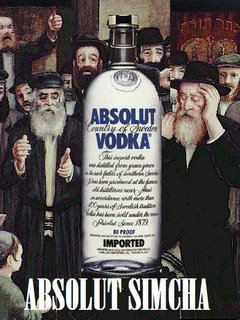
An interesting thing I noticed. In New York we did hakafot with the Torahs in the center, us dancing around the Torah. At Chabad they had the Torahs within the counterclockwise procession and at the center was the alcohol, a gigantic bottle of whiskey (with a mechanism for pouring) and a gigantic bottle of vodka (with a pump). I wonder if there is anything in this.

No, I'm not talking about a ho named Shana, no matter how great you may think she is. Idiot. It's the Great Hoshana, It's Hoshana Rabbah!
Now that we've cleared that up, these next three days have the strangest rituals Judaism has to offer. I have always imagined a Gentile stepping in to one of the services we celebrate this week. This past week they would have seen us shaking and walking in procession with long sticks and fruits and yelling things like "Save us! Three hours! Save us!". In addition to multiplying that by seven today, we also beat the crap out of defenseless twigs while one of us wears a white robe and switches melodies on us. Are we Jewish or Druish? Is this some sort of Friday the Thirteenth ritual, perhaps a way of conquering friggatriskaidekaphobia? Afterwards our hands are covered in green. There are chairs at my high school that to this day are covered in green stains, never to be lifted. Tomorrow's no better. Once again the leader is clad in a white death-robe (or in some communities, a poncho, trenchcoat, or raincoat) and praying for rain in a plaintive melody. In the communities that wear the waterproof prayer-gear, we throw water at the prayer leader (anyone at Koach's services at the Columbia/Barnard Hillel last year should remember this). Finally we dance with heavy Torahs while impaired and inebriated and singing prayers to the Star-Spangled Banner and college fight songs while simultaneuously taking shots of hard alcohol (careful not to drop the Torah) and reading the last parts of the Torah again and again making sure each and every person present gets a shot to go up to the Torah.
It seems to be a nine day rain dance we do, some days in different forms than others. The Torah is equated to water and both are treasured above all else during these days.
Hoshanah Rabbah, Shmini Atzeret, Simchat Torah; those crazy Jews. A point of advice, if you are going to invite a non-Jewish friend to Jewish services, don't make it these three days. I made the mistake of inviting some friends for the Purim Megillah Reading and didn't explain it to them in advance. Awkward... Those crazy Jews...
One is from a Colbert Report from last week, Stephen Colbert's Teshuvah Hotline for Jews who have wronged him
A promotional video from Birthright. "I wish Yom Kippur was going to be this fun!" YEAH!
Shabbat Shalom,
Matt
Why does the Torah begin here? According to many of our sages it should have began with the mitzvah (told to us during the preparations for the Exodus) to mark Nisan as the first of months, a formative event in Jewish history. Instead, we start with THE formative event in universal history (in more ways than one): the Creation of the World and the Inception of Time.
We start in the beginning; the very beginning.
If you were Adam or Eve and you had the choice of whether or not to eat from the Tree of Knowledge (of Good and Evil), what would you do? Before you decide, consider the possible ramifications of both.
EATING FROM IT: Death, illness, painful childbirth, labor, knowledge accumulation, uncertainty, insecurity
NOT EATING: Paradise, Immortality, innocence, obliviousness, God providing everything, security, repetitiveness
I realize that people rarely if ever post comments, but I ask for a response on this one to vote for whether or not you would vote. A simple online poll. If you would also be willing, tell me why you voted for your choice in the comments section of this blog entry.
Okay, it also happens to be Machar Chodesh, my Bar Mitzvah Haftarah (which occurs when Rosh Chodesh falls on a Sunday (except for a few certain months)). It speaks of the greatest friendship of all time, Jonathan and David. Jonathan, Crown Prince of Israel, and David, the shepherd who was already anointed to succeed King Saul (who was told he’d lose the throne in Chapter 15) were still best friends (even though they logically should have been competing for the succession) and were willing to die for one another. What do you think about this?
Thursday, October 19, 2006
Grammy, 15 years later
Today, the 27th day of the month of Tishri marks the 15th Yahrzeit (anniversary of death) of my grandmother, Evelyn Rutta ז"ל. I was fortunate to have eight years of my life with her and therefore have more than just videotapes to remember her by; I have a pretty lucid memory. I don’t know so much about her past, and do not recall whether she was born in Poland or here, but she was always an enigma. She was a tough lady, but she was was the coolest grandmother. I can remember early in my life when she rode a motorcycle (followed later by an ugly turquoise Chevy, If memory serves me). She also was a great cook. She not only baked, as my Zayde did, but she was an excellent cook. I got to spend a lot of time with her, according to my memory anyway, as my parents dropped me off at her apartment quite often. I knew all her neighbors and a captioned picture frame which contains my photograph in it says it all in two words “Grammy’s Nachas”.
Her vice was that she was a smoker (like my Zayde z”l and my Aunt Susan z”l). Even at that young age I was critical of her smoking. After what I assume was her first stroke in either 1989 or 1990, I told her that she needed to stop smoking, which she finally did. (I even drew a No Smoking sign which she displayed prominently on her wall.) However, smoking caused her death at an early age, just like it did to my Zayde and my Aunt. My lessons learned from this are that although you can have thrilling fun in your life (ie: the motorcycle), I decided then and there that I would never smoke. I never have and, God help me, I never will.
How appropriate that when she died at 2 AM on October 5, 1991, a Shabbat Morning, the Torah portion was Bereishit, the first of the Torah? Her name was Chaye Bat Chayim (spelled חיי בת חיים according to the plaque at my synagogue.), “Life, daughter of Life”. My brother, Josh, whose Hebrew name happens to be חיים (Chayim, “Life”), named after my Grammy’s father, had this as his Bar Mitzvah portion 7 years later. One of the prominent characters of this very first Torah portion is Chava (חוה) (Eve), which also is a feminine form of “Life” as she was “the mother of all life”. Though her mortality was struck in this parasha, she is recorded in the annals of time and history. My Grammy, whether through her numerous recipes still used by people on all sides of my family, or through her quitting smoking cold-turkey after having been addicted to cigarettes her entire life (and therefore, by extension, giving the lesson that if you put your mind to something, you can accomplish anything), or through her Yiddishkeit and the love of Judaism she passed on to me and to all around her, her legacy will endure forever.
אנא תהי נפשה צרורה בצרור החיים, את זקנתי מורתי חיי בת חיים, שהלכה לעולמה, בגן עדן תהי מנוחתה, ונאמר אמן
Her vice was that she was a smoker (like my Zayde z”l and my Aunt Susan z”l). Even at that young age I was critical of her smoking. After what I assume was her first stroke in either 1989 or 1990, I told her that she needed to stop smoking, which she finally did. (I even drew a No Smoking sign which she displayed prominently on her wall.) However, smoking caused her death at an early age, just like it did to my Zayde and my Aunt. My lessons learned from this are that although you can have thrilling fun in your life (ie: the motorcycle), I decided then and there that I would never smoke. I never have and, God help me, I never will.
How appropriate that when she died at 2 AM on October 5, 1991, a Shabbat Morning, the Torah portion was Bereishit, the first of the Torah? Her name was Chaye Bat Chayim (spelled חיי בת חיים according to the plaque at my synagogue.), “Life, daughter of Life”. My brother, Josh, whose Hebrew name happens to be חיים (Chayim, “Life”), named after my Grammy’s father, had this as his Bar Mitzvah portion 7 years later. One of the prominent characters of this very first Torah portion is Chava (חוה) (Eve), which also is a feminine form of “Life” as she was “the mother of all life”. Though her mortality was struck in this parasha, she is recorded in the annals of time and history. My Grammy, whether through her numerous recipes still used by people on all sides of my family, or through her quitting smoking cold-turkey after having been addicted to cigarettes her entire life (and therefore, by extension, giving the lesson that if you put your mind to something, you can accomplish anything), or through her Yiddishkeit and the love of Judaism she passed on to me and to all around her, her legacy will endure forever.
אנא תהי נפשה צרורה בצרור החיים, את זקנתי מורתי חיי בת חיים, שהלכה לעולמה, בגן עדן תהי מנוחתה, ונאמר אמן
Monday, October 16, 2006
Dances With Torahs
Note: I pre-dated this article (though I submit it on Wednesday, October 18th) because it was conceived during the holiday and was begun a few hours following the conclusion of the holiday. I just haven’t found the time to complete the relatively (for me) short entry.
At the conclusion of Simchat Torah we come to the great climax of a very long time of counting that I would say began at Rosh Chodesh Adar (from that point we look up to Purim, where we begin studying for Passover, which we count to Shavuot, which leads to the 17th of Tammuz (Revelation to Golden Calf), which, in the Three Weeks leads to Tisha B’Av. Seven Weeks of Comfort lead to Rosh Hashannah, Ten Days of Repentance to Yom Kippur, the first thing that we do at its conclusion is begin to build the Sukkah for Sukkot, which is followed immediately to Shemini Atzeret AND/OR Simchat Torah. In fact, the entire Torah reading for that year is a Torah cycle which begins, ends, and begins again on Simchat Torah)
During Simchat Torah I went to both VBS and to the Encino Chabad. It was not nearly as fun as New York, of course, but it still felt like Simchat Torah Lite. It was clearer, more than any other day, that I miss New York and all my friends there. There is nothing like all-night Shul-Hopping and the wild accompanying parties.
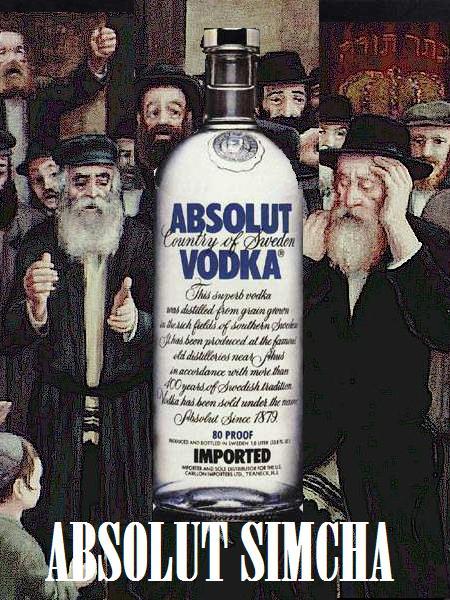
An interesting thing I noticed. In New York we did hakafot with the Torahs in the center, us dancing around the Torah. At Chabad they had the Torahs within the counterclockwise procession and at the center was the alcohol, a gigantic bottle of whiskey (with a mechanism for pouring) and a gigantic bottle of vodka (with a pump). I wonder if there is anything in this.
Saturday, October 14, 2006
DVAR TORAH: V'Zot Habracha (God Kills Mosesdore!)
SPOILER ALERT: Unless you want to hear about an old centigenarian bearded man dying, his soul taken from him unsuccessfully by hated servant and then finally by the man himself. I am of course talking about the death of Moses (for now...)
I figure, it’s the only Torah portion that doesn’t have its own Shabbat (except sometimes in Israel, and even then it’s completely distracted by other circumstances) and therefore nobody gives it the time of day for Torah study. The JTS Torah Commentaries have 15 Divrei torah for some of these Torah portions. For the beautiful parasha of V’Zot Habracha, there are none. Apparently everyone is too drunk to care about the final parasha in the Torah. Maybe because it, like Harry Potter, contains the death of a character who has been so vital to the storyline as well as the most powerful, heroic, and legendary of any who have ever lived. But this is not a story about Dumbledore, this is about Moses. Moses gives a blessing to each (except Simeon, I think, I don’t have it in front of me) tribe (and can you call all of them blessings?) before he dies. I don’t want to talk about the blessing. I want to talk about the midrash surrounding the Death of Moses. It is some of the most entertaining three stooges-style action I have ever read, this being Moe (Moses), Curly (Samael, because I imagine the Angel of Death as bald for the purposes of this) and Larry (God’s REAL Name… I’m kidding) (This from “The Legends of the Jews” by Rabbi Louis Ginzberg, a fuller account of this can be found at Sacred-Texts) (it's quite a read, but I think its worth it)
I don’t want to delve into it, it discusses it pretty fully, but could you imagine the visual of Moses beating the Angel of Death with his walking stick to within an inch of his life? Go Moshe!
The death of Moses is actually quite strange in the Torah. After Moses died, the Torah continues to talk about him. Is Moses delivering his own eulogy? Pre- or Post-Mortem? You decide.
Shabbat Shalom and Gut Yontif!
I figure, it’s the only Torah portion that doesn’t have its own Shabbat (except sometimes in Israel, and even then it’s completely distracted by other circumstances) and therefore nobody gives it the time of day for Torah study. The JTS Torah Commentaries have 15 Divrei torah for some of these Torah portions. For the beautiful parasha of V’Zot Habracha, there are none. Apparently everyone is too drunk to care about the final parasha in the Torah. Maybe because it, like Harry Potter, contains the death of a character who has been so vital to the storyline as well as the most powerful, heroic, and legendary of any who have ever lived. But this is not a story about Dumbledore, this is about Moses.
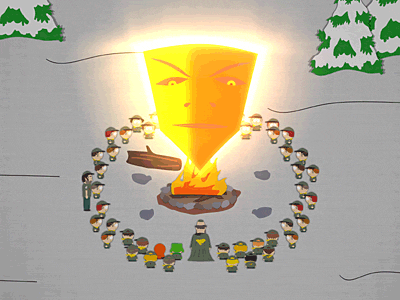 Moses gives a blessing to each (except Simeon, I think, I don’t have it in front of me) tribe (and can you call all of them blessings?) before he dies. I don’t want to talk about the blessing. I want to talk about the midrash surrounding the Death of Moses. It is some of the most entertaining three stooges-style action I have ever read, this being Moe (Moses), Curly (Samael, because I imagine the Angel of Death as bald for the purposes of this) and Larry (God’s REAL Name… I’m kidding) (This from “The Legends of the Jews” by Rabbi Louis Ginzberg, a fuller account of this can be found at Sacred-Texts) (it's quite a read, but I think its worth it)
When God perceived that Moses was prepared to die, He said to the angel Gabriel, "Go, fetch Me Moses' soul." But he replied, "How should I presume to approach and take the soul of him that outweighs sixty myriads of mortals!" God then commissioned the angel Michael to fetch Moses' soul, but he amid tears refused on the same grounds as Gabriel. God then said to the angel Zagzagel, "Fetch Me Moses' soul!" He replied, "Lord of the world! I was his teacher and he my disciple, how then should I take his soul!" Then Samael appeared before God and said: "Lord of the world! Is Moses, Israel's teacher, indeed greater than Adam whom thou didst create in Thine image and Thy likeness? Is Moses greater, perchance, than Thy friend Abraham, who to glorify Thy name cast himself into the fiery furnace? Is Moses greater, perchance, than Isaac, who permitted himself to be bound upon the altar as a sacrifice to Thee? Or is he greater than Thy firstborn Jacob, or than his twelve sons, Thy saplings? Not one of them escaped me, give me therefore permission to fetch Moses' soul." God replied: "Not one of all these equals him. How, too, wouldst thou take his soul? From his face? How couldst thou approach his face that had looked upon My Face! From his hands? Those hands received the Torah, how then shouldst thou be able to approach them! From his feet? His feet touched My clouds, how then shouldst thou be able to approach them! Nay, thou canst not approach him at all." But Samael said, "However it be, I pray Thee, permit me to fetch his soul! " God said, "Thou had My consent."
Samael now went forth from God in great glee, took his sword, girded himself with cruelty, wrapped himself in wrath, and in a great rage betook himself to Moses. When Samael perceived Moses, he was occupied in writing the Ineffable Name. Dart of fire shot from his mouth, the radiance of his face and of his eyes shone like the sun, so that he seemed like an angel of the hosts of the Lord, and Samael in fear and trembling thought, "It was true when the other angels declared that they could not seize Moses' soul!"
Moses who had known that Samael would come, even before his arrival, now lifted his eyes and looked upon Samael, whereupon Samael's eyes grew dim before the radiance of Moses' countenance. He fell upon his face, and was seized with the woes of a woman giving birth, so that in his terror he could not open his mouth. Moses therefore addressed him, saying: "Samael, Samael! 'There is no peace, saith my God, to the wicked!' Why dost thou stand before me? Get thee hence at once, or I shall cut off thy head." In fear and trembling Samael replied: "Why art thou angry with me, my master, give me thy soul, for thy time to depart from the world is at hand." Moses: "Who sent thee to me?" Samael: "He that created the world and the souls." Moses: "I will not give thee my soul." Samael: "All souls since the creation of the world were delivered into my hands." Moses: "I am greater than all others that came into the world, I have had a greater communion with the spirit of God than thee and thou together." Samael: "Wherein lies thy preeminence?" Moses: "Dost thou not know that I am the son of Amram, that came circumcised out of my mother's womb, that at the age of three days not only walked, but even talked with my parents, that took no milk from my mother until she received her pay from Pharaoh's daughter? When I was three months old, my wisdom was so great that I made prophecies and said, 'I shall hereafter from God's right hand receive the Torah.' At the age of six months I entered Pharaoh's palace and took off the crown from his head. When I was eighty years old, I brought the ten plagues upon Pharaoh and the Egyptians, slew their guardian angel, and led the sixty myriads of Israel out of Egypt. I then clove the sea into twelve parts, led Israel through the midst of them, and drowned the Egyptians in the same, and it was not thou that took their souls, but I. It was I, too, that turned the bitter water into sweet, that mounted into heaven, and there spoke face to face with God! I hewed out two tables of stone, upon which God at my request wrote the Torah. One hundred and twenty days and as many nights did I dwell in heaven, where I dwelled under the Throne of Glory; like an angel during all this time I ate no bread and drank no water. I conquered the inhabitants of heaven, made known there secrets to mankind, received the Torah from God's right hand, and at His command wrote six hundred and thirteen commandments, which I then taught to Israel. I furthermore waged war against the heroes of Sihon and Og, that had been created before the flood and were so tall that the waters of the flood did not even reach their ankles. In battle with them I bade sun and moon to stand still, and with my staff slew the two heroes. Where, perchance, is there in the world a mortal who could do all this? How darest thou, wicked one, presume to wish to seize my pure soul that was given me in holiness and purity by the Lord of holiness and purity? Thou hast no power to sit where I sit, or to stand where I stand. Get thee hence, I will not give thee my soul."
Samael now in terror returned to God and reported Moses' words to Him. God's wrath against Samael was now kindled, and He said to him: "Go, fetch Me Moses soul, for if thou dost not do so, I shall discharge thee from thine office of taking men's souls, and shall invest another with it." Samael implored God, saying: "O Lord of the world, whose deed are terrible, bid me go to Gehenna and there turn uppermost to undermost, and undermost to uppermost, and I shall at once do so without a moment's hesitation, but I cannot appear before Moses." God: "Why not, pray?" Samael: "I cannot do it because he is like the princes in thy great chariot. Lightning-flashes and fiery darts issue from his mouth when he speaks with me, just as it is with the Seraphim when they laud, praise and glorify Thee. I pray Thee, therefore, send me not to him, for I cannot appear before him." But God in wrath said to Samael: "Go, fetch Me Moses' soul," and while he set about to execute God's command, the Lord furthermore said: "Wicked one! Out of the fire of Hell was thou created, and to the fire of Hell shalt thou eventually return. First in great joy didst thou set out to kill Moses, but when thou didst perceive his grandeur and his greatness, thou didst say, 'I cannot undertake anything against him.' It is clear and manifest before Me that thou wilt now return from him a second time in shame and humiliation."
Samael now drew his sword out of its sheath and in a towering fury betook himself to Moses, saying, "Either I shall kill him or he shall kill me." When Moses perceived him he arose in anger, and with his staff in his hand, upon which was engraved the Ineffable Name, set about to drive Samael away. Samael fled in fear, but Moses pursued him, and when he reached him, he struck him with his staff, blinded him with the radiance of his face, and then let him run on, covered with shame and confusion. He was not far from killing him, but a voice resounded from heaven and said, "Let him live, Moses, for the world is in need of him," so Moses had to content himself with Samael's chastisement.
GOD KISSES MOSES' SOUL
In the meanwhile Moses' time was at an end. A voice from heaven resounded, saying: "Why, Moses, dost thou strive in vain? Thy last second is at hand." Moses instantly stood up for prayer, and said: "Lord of the world! Be mindful of the day on which Thou didst reveal Thyself to me in the bush of thorns, and be mindful also of the day when I ascended into heaven and during forty days partook of neither food nor drink. Thou, Gracious and Merciful, deliver me not into the hand of Samael." God replied: "I have heard thy prayer. I Myself shall attend to thee and bury thee." Moses now sanctified himself as do the Seraphim that surround the Divine Majesty, whereupon God from the highest heavens revealed Himself to receive Moses' soul. When Moses beheld the Holy One, blessed he His Name, he fell upon his face and said: "Lord of the world! In love didst Thou create the world, and in love Thou guidest it. Treat me also with love, and deliver me not into the hands of the Angel of Death." A heavenly voice sounded and said: "Moses, be not afraid. 'Thy righteousness shall go before thee; the glory of the Lord shall be thy reward.'"
With God descended from heaven three angels, Michael, Gabriel, and Zagzagel. Gabriel arranged Moses' couch, Michael spread upon it a purple garment, and Zagzagel laid down a woolen pillow. God stationed Himself over Moses' head, Michael to his right, Gabriel to his left, and Zagzagel at his feet, whereupon God addressed Moses: "Cross thy feet," and Moses did so. He then said, "Fold thy hands and lay them upon thy breast," and Moses did so. Then God said, "Close thine eyes," and Moses did so. Then God spake to Moses' soul: "My daughter, one hundred and twenty years had I decreed that thou shouldst dwell in this righteous man's body, but hesitate not now to leave it, for thy time is run." The soul replied: "I know that Thou art the God of spirits and of souls, and that in Thy hand are the souls of the living and of the dead. Thou didst create me and put me into the body of this righteous man. Is there anywhere in the world a body so pure and holy as this it? Never a fly rested upon it, never did leprosy show itself upon it. Therefore do I love it, and do not wish to leave it." God replied: "Hesitate not, my daughter! Thine end hath come. I Myself shall take thee to the highest heavens and let thee dwell under the Throne of My Glory, like the Seraphim, Ofannim, Cherubim, and other angels." But the soul replied: "Lord of the world! I desire to remain with this righteous man; for whereas the two angels Azza and Azazel when they descended from heaven to earth, corrupted their way of life and loved the daughters of the earth, so that in punishment Thou didst suspend them between heaven and earth, the son of Amram, a creature of flesh and blood, from the day upon which Thou didst reveal Thyself from the bush of thorns, has lived apart from his wife. Let me therefore remain where I am." When Moses saw that his soul refused to leave him, he said to her: "Is this because the Angel of Death wished to show his power over thee?" The soul replied: "Nay, God doth not wish to deliver me into the hands of death." Moses: "Wilt thou, perchance, weep when the others will weep at my departure?" The soul: "The Lord 'hath delivered mine eyes from tears.'" Moses: "Wilt thou, perchance, go into Hell when I am dead?" The soul: "I will walk before the Lord in the land of the living." When Moses heard these words, he permitted his soul to leave him, saying to her: "Return unto thy rest, O my soul; for the Lord hath dealt bountifully with thee." God thereupon took Moses' soul by kissing him upon the mouth.
Moses activity did not, however, cease with his death, for in heaven he is one of the servants of the Lord. God buried Moses' body in a spot that remained unknown even to Moses himself. Only this is know concerning it, that a subterranean passage connects it with the graves of the Patriarchs. Although Moses' body lies dead in its grave, it is still as fresh as when he was alive.
I don’t want to delve into it, it discusses it pretty fully, but could you imagine the visual of Moses beating the Angel of Death with his walking stick to within an inch of his life? Go Moshe!
The death of Moses is actually quite strange in the Torah. After Moses died, the Torah continues to talk about him. Is Moses delivering his own eulogy? Pre- or Post-Mortem? You decide.
Shabbat Shalom and Gut Yontif!
Matt son of Honi the Circlemaker (משה בן חוני המעגל)?
Many of my prayers to-date remain unanswered, but there is one that God and I are simpatico. I was sitting in the Jacuzzi (whose heat, I realized – too late – had been recently turned off). Whatever, it is a relatively cool day, probably in the mid 70s so the spa, slightly warmer at around 78F would be relatively warmer, especially if I turned on the jets. As I wait for the jets to heat the Jacuzzi, I start to hum the plaintive chant that is “Geshem”, the melody that introduces the hopefully-rainy season, recited once a year (tomorrow) on Shemini Atzeret. Naturally the focus on my mind is interesting Jewish liturgical pieces and because of its proximity, I start humming it. I’m sort of superstitious that I shouldn’t recite the word “Geshem” before Shemini Atzeret when I am “practicing” for the very reason that follows. As soon as I begin to chant, the cloudless sky sends forth rain. This is just for a hum. I A couple of years ago while I was actually doing the Geshem prayer at Koach, and it starts to pour outside. The dramatic effect of thunder and lightning as I’m singing the “Yi-i-i-i-i-i-i-it-ga-da-al” is amazing. The only thing that would have made it cooler would have been a quartet with a violin, a fiddle, a viola, and a bass. Perhaps a clarinet too. How about an entire orchestra, minus the drums (God has that covered with the thunderclaps). Another example is when I was leading four years ago in February on the Shabbat of Presidents’ Day Weekend. Though this was not Shmini Atzeret, we do say “Mashiv Haruach U’Morid HaGashem” as part of every Amidah during the Winter (Winter being one of the two seasons in the Mediterranean climate). Suddenly the great blizzard started which snowballed (ha!) into one of the biggest in NYC history (surpassed by the one I missed this past year). I may be a descendant of Honi the Circlemaker. Now maybe God can answer some of my other prayers...
Friday, October 13, 2006
The great ho, Shana?

No, I'm not talking about a ho named Shana, no matter how great you may think she is. Idiot. It's the Great Hoshana, It's Hoshana Rabbah!
Now that we've cleared that up, these next three days have the strangest rituals Judaism has to offer. I have always imagined a Gentile stepping in to one of the services we celebrate this week. This past week they would have seen us shaking and walking in procession with long sticks and fruits and yelling things like "Save us! Three hours! Save us!". In addition to multiplying that by seven today, we also beat the crap out of defenseless twigs while one of us wears a white robe and switches melodies on us. Are we Jewish or Druish? Is this some sort of Friday the Thirteenth ritual, perhaps a way of conquering friggatriskaidekaphobia? Afterwards our hands are covered in green.
 There are chairs at my high school that to this day are covered in green stains, never to be lifted. Tomorrow's no better. Once again the leader is clad in a white death-robe (or in some communities, a poncho, trenchcoat, or raincoat) and praying for rain in a plaintive melody. In the communities that wear the waterproof prayer-gear, we throw water at the prayer leader (anyone at Koach's services at the Columbia/Barnard Hillel last year should remember this). Finally we dance with heavy Torahs while impaired and inebriated and singing prayers to the Star-Spangled Banner and college fight songs while simultaneuously taking shots of hard alcohol (careful not to drop the Torah) and reading the last parts of the Torah again and again making sure each and every person present gets a shot to go up to the Torah.
 It seems to be a nine day rain dance we do, some days in different forms than others. The Torah is equated to water and both are treasured above all else during these days.
Hoshanah Rabbah, Shmini Atzeret, Simchat Torah; those crazy Jews. A point of advice, if you are going to invite a non-Jewish friend to Jewish services, don't make it these three days. I made the mistake of inviting some friends for the Purim Megillah Reading and didn't explain it to them in advance. Awkward... Those crazy Jews...
Monday, October 09, 2006
"Dem Bums"
I have honestly always lowered my expectations when it comes to the Dodgers, particularly during the rare occasion they are in the Playoffs. Doing so lessens the constant disappointment with which I should be faced from March to September (and sometimes the first week October). The Dodgers have only won one post-season game since they won it all in 1988. There's always next year... for further Dodger disappointment (chas v'shalom).
In other news, I decided there is nothing better than having a hot glass of turkish coffee before davening on Yom Tov while sitting in a sukkah and reading the Sunday newspaper and/or the Mishnah Torah. Yep.
Moadim L'Simcha (Chagim U'Zmanim L'Sason)
[Et Yo-oh-oh-ohm Chag HaSukkot Ha-ze-eh...]
I would go through all of Musaf, but it is more fun to respond this way in person.
In other news, I decided there is nothing better than having a hot glass of turkish coffee before davening on Yom Tov while sitting in a sukkah and reading the Sunday newspaper and/or the Mishnah Torah. Yep.
Moadim L'Simcha (Chagim U'Zmanim L'Sason)
[Et Yo-oh-oh-ohm Chag HaSukkot Ha-ze-eh...]
Zochreinu Hashem Elokeynu Bo LeTova (amen!)
U'fokdeynu bo livracha (amen!)
V'hoshiey-ey-ey-nu bo lecha-yi-im (ah-meh-en!)
I would go through all of Musaf, but it is more fun to respond this way in person.
Saturday, October 07, 2006
A Mishebeyrach for the Dodgers
This is incomplete and poorly written, I need to shower, and the Dodgers are 0-2 in a 3-of-5 game series so this is going to take a prayer and a miracle. Here’s the prayer.
He who blessed Gibby in ’88, may he bless those who are vested in the blue and white, Thy glorious colors. They that dwell in a city which invokes Your heavenly host, the City of Angels, look to Thee in supplication to grant victory to their battles against the enemy on the other side of the Great [Mississippi] River. May the Holy One grant salvation to the Los Angeles Dodgers, partularly reinforce their endgame and protect them from choking, as it is written, “In the Big Inning” (Genesis 1:1). He who has compassion on bride and bridegroom, as it is written “voices of happiness, voices of joy, voice of the bridegroom, voice of the bride”, may God be compassionate to those known as the Brooklyn Bridegrooms. May their bride be the victory of the world [series]. Crown their efforts with victory and may they persevere over "the dead ones" (Mets).
v’NOMAR Amen!
He who blessed Gibby in ’88, may he bless those who are vested in the blue and white, Thy glorious colors. They that dwell in a city which invokes Your heavenly host, the City of Angels, look to Thee in supplication to grant victory to their battles against the enemy on the other side of the Great [Mississippi] River. May the Holy One grant salvation to the Los Angeles Dodgers, partularly reinforce their endgame and protect them from choking, as it is written, “In the Big Inning” (Genesis 1:1). He who has compassion on bride and bridegroom, as it is written “voices of happiness, voices of joy, voice of the bridegroom, voice of the bride”, may God be compassionate to those known as the Brooklyn Bridegrooms. May their bride be the victory of the world [series]. Crown their efforts with victory and may they persevere over "the dead ones" (Mets).
v’NOMAR Amen!
Friday, October 06, 2006
DVAR TORAH: Sukkot
Sukkot is the ultimate Festival. One of its names given in the Jewish tradition is "החג" “The Festival”. A trivia question on previously my favorite game show, “Win Ben Stein’s Money” was something to the effect of “What is the Jewish Thanksgiving?” The answer, which I somehow was not able to identify, reasoning that every single festival involves some sort of “thanksgiving”. The answer was “Sukkot”. It is a holiday for which we give thanksgiving to the gifts we are given in nature. For seven days we brave the elements and spend more time eating outdoors than we might cumulatively during a summer. LA has a Mediterranean climate but if you’re in New York (which many of my readers are), then you have cold and rain to deal with. And yet, we desire not the rain, cold, or wind which are so necessary for agrarian societies, that which we are celebrating on this holiday. That is, until the conclusion of the festival when we begin to pray for rain. For now, we want mild weather to be able to dwell in our Sukkot in relative serenity.
There were some very unique Temple rituals that took place during sukkot. The dwelling in booths is quite unique for this holiday, as is the strange ritual with the lulav and etrog, possibly a knockoff of an ancient pagan fertility ritual (hint: they allegedly used to use a second etrog).
We read in the first mishna of chapter 8 of Sukkah,
The other ritual I want to focus on is the interesting number of animals slaughtered on Sukkot. Bulls are the animals of choice on this festival. On the first day of sukkot there were offered, in addition to the normal stuff and the extra libations, 13 bulls. On the second day, 12, and decreasing by one daily until the seventh day there were 7 bulls offered. The total amount of bulls offered during the festival of Sukkot is 70. Seventy is one of those key numbers in Judaism. It is the number of elders in the Torah. Here it corresponds to the 70 “Nations” of the world (descended from 70 non-Jewish families in the Torah). These bulls are meant to atone for the sins of all the other nations. The Jews are the “Light unto the Nations” and have always seeked the welfare of Jew and non-Jew alike. But there was an Eighth Day of Assembly for God to celebrate just with His people, and one final bull was sacrificed for the nation of Israel. 71 Bulls in total; the Sanhedrin was composed of one more person than the elders of Moses’ time. 71 members, one of whom was the nasi, the leader. The Jewish people are the nesiim of the world and have a role in being guides, the aforementioned “Light Unto the Nations”
Go out and be that light unto the nations
Shabbat Shalom and Moadim L’Simcha!
There were some very unique Temple rituals that took place during sukkot. The dwelling in booths is quite unique for this holiday, as is the strange ritual with the lulav and etrog, possibly a knockoff of an ancient pagan fertility ritual (hint: they allegedly used to use a second etrog).
We read in the first mishna of chapter 8 of Sukkah,
"כל מי שלא ראה שמחת בית השואבה, לא ראה שמחה מימיו".If one did not witness the Simchat Beit HaShoeva ceremony, they have never experienced true joy in their lives. This ceremony of the water libations of Sukkot was jam-packed with joyous celebrations. People sang, people danced, people juggled fiery torches. Fun was had by all. We are unable to describe the feelings experienced by the attendees of this event and we desire its reinstitution. Think Carlebach Shul on Simchat Torah but more fun and more fire. The residents of Mathilde Schechter Residence Hall a few years back did one of their own non-sanctioned Simchat Beit Hashoevah ceremonies, one which involved placing cups of water on top of the elevator door causing the water to libate on victims heads. I later read a Rambam that non-priests were not allowed to perform a Simchat Beit HaShoevah under penalty of death. Oops.
The other ritual I want to focus on is the interesting number of animals slaughtered on Sukkot. Bulls are the animals of choice on this festival. On the first day of sukkot there were offered, in addition to the normal stuff and the extra libations, 13 bulls. On the second day, 12, and decreasing by one daily until the seventh day there were 7 bulls offered. The total amount of bulls offered during the festival of Sukkot is 70. Seventy is one of those key numbers in Judaism. It is the number of elders in the Torah. Here it corresponds to the 70 “Nations” of the world (descended from 70 non-Jewish families in the Torah). These bulls are meant to atone for the sins of all the other nations. The Jews are the “Light unto the Nations” and have always seeked the welfare of Jew and non-Jew alike. But there was an Eighth Day of Assembly for God to celebrate just with His people, and one final bull was sacrificed for the nation of Israel. 71 Bulls in total; the Sanhedrin was composed of one more person than the elders of Moses’ time. 71 members, one of whom was the nasi, the leader. The Jewish people are the nesiim of the world and have a role in being guides, the aforementioned “Light Unto the Nations”
Go out and be that light unto the nations
Shabbat Shalom and Moadim L’Simcha!
Thursday, October 05, 2006
Teshuva Hotline and Birthright message
Stephen Colbert - Days of Repentance Hotline
Too funny and [in]appropriate for me to pass up. I needed to post this.
Happy Rosh Hashanah from birthright
"I wish Yom Kippur was gonna be this fun..." "YEAH!!!"
Too funny and [in]appropriate for me to pass up. I needed to post this.
Happy Rosh Hashanah from birthright
"I wish Yom Kippur was gonna be this fun..." "YEAH!!!"
Tuesday, October 03, 2006
Yom Kippur: A requiem
This post will be full of relatively quick bullet points
-There is nothing that tastes better than that first sip of water after 26 hours of fasting. I could go longer, but who wants to?
-I feel like Ariel in "The Little Mermaid", my voice was not present when I needed it. Shacharit went pretty well except for the fact that I couldn't shout, even though I was as virtuoso as usual. I masked this fact by singing quieter and in lower, more subdued ending notes, with the pretense that Yom Kippur is "darker" and more severe than Rosh Hashannah in attitude (For example, Yaaleh V'Yavo, which I do in major on Rosh Hashannah, I did in minor today).
-All-in-all it went pretty well, though I did screw up at one point when I wasn't looking in my Machzor and skipped a line in Tzur Yisrael of all places (I scrambled to fix the mistake)
-Further with the voice thing, the Ritual Director, Yossi, had me do the Chassidic Kaddish once again at his Neilah. Let me first explain that there are thousands of people at two different Neilah services. It's pandamoneum in there and they don't do everything because the choir is in there. In the small Winer Chapel, however, they have ~200 people doing a gantze Neilah and Maariv which I felt was considerably more "East Coast Traditional" than the Sanctuary or Secondary Service. I should mention that there were not enough seats in this small room. It didn't matter anyway; we were standing for an hour.
-I dislike these new Machzors they use at VBS. I have to inconveniently call other pages in order to follow my melodies, sometimes many hundreds of pages at a time. Just annoyed.
-How bout dem bums? The Dodgers are going to the playoffs and are gonna face the Mets! I also heard this Dodgers Song from 1962 which I really enjoyed. Here is the chatima (sorry, still in YK mode):
So you see, Dodgerblues.com's' foundations predate Al Gore's invention of the Internet("Do you really think we'll really win the pennant?")
-Going full circle, the break-fast: I made four quiches (e-coli-less spinach) for break-fast. They went pretty quickly. I think that whoever hosts a break-fast is accorded the honor of the High Priest, they made a party for their friends after succeeding in gaining atonement for Israel.
Uh, that's all for now, I think. Next fast is exactly one season away, the 10th of Tevet, 3 months away. L'Shana HaBa Bi'rushalayim Habnuya!!!
-There is nothing that tastes better than that first sip of water after 26 hours of fasting. I could go longer, but who wants to?
-I feel like Ariel in "The Little Mermaid", my voice was not present when I needed it. Shacharit went pretty well except for the fact that I couldn't shout, even though I was as virtuoso as usual. I masked this fact by singing quieter and in lower, more subdued ending notes, with the pretense that Yom Kippur is "darker" and more severe than Rosh Hashannah in attitude (For example, Yaaleh V'Yavo, which I do in major on Rosh Hashannah, I did in minor today).
-All-in-all it went pretty well, though I did screw up at one point when I wasn't looking in my Machzor and skipped a line in Tzur Yisrael of all places (I scrambled to fix the mistake)
-Further with the voice thing, the Ritual Director, Yossi, had me do the Chassidic Kaddish once again at his Neilah. Let me first explain that there are thousands of people at two different Neilah services. It's pandamoneum in there and they don't do everything because the choir is in there. In the small Winer Chapel, however, they have ~200 people doing a gantze Neilah and Maariv which I felt was considerably more "East Coast Traditional" than the Sanctuary or Secondary Service. I should mention that there were not enough seats in this small room. It didn't matter anyway; we were standing for an hour.
-I dislike these new Machzors they use at VBS. I have to inconveniently call other pages in order to follow my melodies, sometimes many hundreds of pages at a time. Just annoyed.
-How bout dem bums? The Dodgers are going to the playoffs and are gonna face the Mets! I also heard this Dodgers Song from 1962 which I really enjoyed. Here is the chatima (sorry, still in YK mode):
So I say D, I say D-O,
D-O-D-G-E-R-S
The team that's all heart
All heart and all thumbs
They're my Los Angeles
Your Los Angeles
Our Los Angeles
Do you really think we'll really win the pennant?
Bums! Oooo dem bums!
So you see, Dodgerblues.com's' foundations predate Al Gore's invention of the Internet("Do you really think we'll really win the pennant?")
-Going full circle, the break-fast: I made four quiches (e-coli-less spinach) for break-fast. They went pretty quickly. I think that whoever hosts a break-fast is accorded the honor of the High Priest, they made a party for their friends after succeeding in gaining atonement for Israel.
Uh, that's all for now, I think. Next fast is exactly one season away, the 10th of Tevet, 3 months away. L'Shana HaBa Bi'rushalayim Habnuya!!!
Sunday, October 01, 2006
DVAR TORAH: Yom Kippur (The still small voice)
The prayer that epitomizes the High Holiday season has to be the Untane Tokef. It captures the sheer awesomeness and awfulness of the season. It's scary to boot! It basically says that you're going to die. Here are the choices (you don't get to choose) on how you will die... Yep. Fun, lighthearted stuff. Even the angels are freaked out. Everything you have ever done, even the stuff you have forgotten, is written in a book which is reviewed by God, a book which we sign off on.
The history of its composition is as intriguing as the prayer itself (I recite this from memory, it may be slightly different than the original account). A millennium ago European anti-Semitism was reaching one of its many peaks. In Mainz, Germany, though the Archbishop and Rabbi got along, the Pope was putting pressure to dissolve all ties between Christians and Jews and to convert as many as possible. The Archbishop told his friend, Rabbi Amnon that he had to convert to Christianity or die. Rabbi Amnon asked for some time to think, a request which his former friend granted in the form of three days. When R’ Amnon got home he was livid at himself for even considering becoming an apostate and waited the three days for the papal goons to drag him off. The Archbishop asked, “are you ready to renounce your religion?” The Rabbi responded, “I will only walk in the path of Hashem”. The Archbishop therefore ordered his legs be chopped off and repeated the question, to which Rabbi Amnon responded, “My hands only serve God”. His hands were chopped off. “Last chance”, said the Archbishop. “Let me speak the praises of the Lord” was Rabbi Amnon’s response. So he removed his tongue. He left the Rabbi a bleeding mass in front of the synagogue. It was Erev Rosh Hashannah when this happened. The Rabbi wasn’t dead but he didn’t have much time. In the morning right before the Kedusha, members of the synagogue placed the dying, legless, armless, tongueless rabbi in front of the open Ark, and right after the chazzan said the U’vchen which precedes it, the Rabbi miraculously sang(he didn’t have a tongue) extemporaneously, "בראש השנה תכתבון וביום צום כפור יחתמון... מיחיה ומי ימות..." “On Rosh Hashannah it is written, and on Yom Kippur it is sealed, who shall live and who shall die!”. Having completed his opus, the Rabbi expired before the open ark. After Yom Tov, the Rabbi came to the Cantor in a dream and repeated all of the words of the Untane Tokef, which the latter wrote down and instituted eternally as the preface to the Musaf Kedusha, scaring the bejesus out of people who have paid attention at services now for over a millennium.
Even without this remarkable story, which I love to regale people with at Shabbat meals (as some people at my table at a Hillel-wide dinner a couple of semesters ago will attest), there cannot be anything taken away from the awesome and awful power hidden within these words. Besides the numerous hideous ways listed that we can possibly die, there is a lot of beauty here. God is our Shepherd and we are His sheep. We do His Will, and He counts us. A shepherd has compassion for his sheep, even when they do stupid destructive things, after all, they’re just stupid animals. We must confront our actions.
קול דממה דקה ישמע. The great shofar is sounded and yet a small silent voice can be heard”.
Amidst the chaotic nature of the day, God listens to everyone. According to BT Brachot, If a simple shepherd says “thanks for the bread” in lieu of the Motzi before eating a meal, God accepts the prayer. The still silent voice of Bonche the Silent (who I mentioned in my Dvar Torah for Parashat Ki Tetze) is treasured by God. In the Midrashic accounts of the story of Esther, it is only after the children, condemned to an earlier death by the evil Haman, cry out to God from the dungeon that God tears up the heavenly decree against the Jews and turns the tables on the evil Vizier. There are so many examples in rabbinic literature and in the Wissenschaft des Judentums (to borrow an overused term)
“the meek shall inherit the earth”
"ותשובה ותפילה וצדקה מעבירין את רוע הגזרה", repentance, prayer, and righteousness will avert the evil decree. It used to be rendered "מבטילין את רוע הגזרה", that these things “cancel the evil decree”, however this is obviously not the case. Good people die along with the bad, and some of the most evil people can live to a ripe old age. Theodicy is a very serious subject in Judaism. How does someone wholehearted and righteous as Job suffer at the hands of God and The Satan? Jonah, to bring in a Yom Kippur example, doesn’t want to go to Nineveh to warn the Assyrians to repent. Why? Through their teshuva and fasting they were able to tear up the heavenly sentence for their own destruction… and go on to destroy the Northern Kingdom of Israel and wipe out 10 of its 12 Tribes. But they got their just desserts in the end. Anyone who oppressed the Chosen People did not stand the test of time. Even from the Jewish standpoint, we die just as everyone else does, and our good deeds mean bupkis in terms of if and when we are going to die. Actually, what seems to be expressed in this prayer is how you’re going to die. Will we live to a ripe old age or will we die untimely? Will it be in some horrible disaster or execution or will we die peacefully? Will we have a lot of money to leave to our descendents or will we be poor? When we are remembered, what things will be called to mind? Will we be remembered? Life and death, these are rightly out of our hands. What we have in our power is the ability to live virtuous lives. Even the poorest person must give tzedekah. The wealthiest shouldn’t feel any better than the poorest when they give tzedekah, even though they may give much more money. To quote the Prince of Egypt, “to one lost sheep, a shepherd boy is greater than the richest king”. Like so many things quality must be stressed over quantity. Using one of my current online obsessions as an example, Wikipedia, though it may seem more glamorous to make as many edits as possible, it is considered even better to vastly improve a single article. I have way too many facebook friends. It cheapens the entire purpose of friendship so much that I have begun to reject people that I don’t know (sorry if you’re one of them, message me in the way you actually know me and I will consider it, just don’t stalk me). Um, anyway, the message is that we all must make a positive difference in the world in whatever way we can. We admit that we are nothing. In the grand scheme of things we are as a driven leaf. Bonsche the silent was assigned this moniker. Dust in the wind, A passing dream.
But remember that the still small voice is heard amongst the chaos. Bonche was welcomed with open arms into paradise until he screwed it up with his mouth and insipid lack of ambition. We must aspire for greatness and still be grounded enough to realize that we are human and mortal. The crown of a good name exceeds all other types of crowns.
Humans need teshuva. I think the build up without it would lead to hatred, loathing, and murder. Teshuva predated the creation of the world, my Rabbi said Saturday morning at services. I said that I disagree with the Midrash and that teshuva was planted within the Tree of Knowledge of Good and Evil. If it was in the world beforehand, then only discerning minds could learn how to unlock it. The only one to never have Original Sin (another thing that got brought up in the discussion yesterday), I said, was Cain, who was chronologically born before the eating from the Tree. He had no concept of Teshuva, so when he felt Abel and God wronged him, he went out into the field and murdered his brother. When God asked what Cain had done, Cain infamously asked, “am I my brother’s keeper?” Cain shows no remorse, no teshuva. He can’t. He doesn’t know. He is filled with so much hate that he has no ability to vent or accept anything. Teshuva is foreign to him and if the entire world was filled with people like him, everyone would be dead. If God was not forgiving, then Noah and his clan wouldn’t have been saved in the flood or its aftermath either. It takes the ability to say you are sorry and the ability to accept apologies. Both of these things take the greatest resolve, courage, and in order to do it you have to “lose face” as the kids call it these days. Pharaoh was unable to listen to Moses because his heart was hardened. Likewise, so many of us have hardened our hearts, whether intentionally or unintentionally, to reason, to compromise, to peace. The Torah and the High Holiday liturgy suggest a cure, may we circumcise our hearts (metaphorically of course) to love God so that we may live. We need to learn to open our hearts to accept those who beg our forgiveness, just as God readily does for us, and we need to soften our hearts and tread on our egos to “lower” ourselves to apologize for wronging others. Then maybe, just maybe, we can live in peace.
Gmar Chatima Tova, May we be sealed for a year of goodness. Also, if I have wronged any of you in any way in the past, please accept my apology. I am also ready to accept people who have wronged me, just ask.
The history of its composition is as intriguing as the prayer itself (I recite this from memory, it may be slightly different than the original account). A millennium ago European anti-Semitism was reaching one of its many peaks. In Mainz, Germany, though the Archbishop and Rabbi got along, the Pope was putting pressure to dissolve all ties between Christians and Jews and to convert as many as possible. The Archbishop told his friend, Rabbi Amnon that he had to convert to Christianity or die. Rabbi Amnon asked for some time to think, a request which his former friend granted in the form of three days. When R’ Amnon got home he was livid at himself for even considering becoming an apostate and waited the three days for the papal goons to drag him off. The Archbishop asked, “are you ready to renounce your religion?” The Rabbi responded, “I will only walk in the path of Hashem”. The Archbishop therefore ordered his legs be chopped off and repeated the question, to which Rabbi Amnon responded, “My hands only serve God”. His hands were chopped off. “Last chance”, said the Archbishop. “Let me speak the praises of the Lord” was Rabbi Amnon’s response. So he removed his tongue. He left the Rabbi a bleeding mass in front of the synagogue. It was Erev Rosh Hashannah when this happened. The Rabbi wasn’t dead but he didn’t have much time. In the morning right before the Kedusha, members of the synagogue placed the dying, legless, armless, tongueless rabbi in front of the open Ark, and right after the chazzan said the U’vchen which precedes it, the Rabbi miraculously sang(he didn’t have a tongue) extemporaneously, "בראש השנה תכתבון וביום צום כפור יחתמון... מיחיה ומי ימות..." “On Rosh Hashannah it is written, and on Yom Kippur it is sealed, who shall live and who shall die!”. Having completed his opus, the Rabbi expired before the open ark. After Yom Tov, the Rabbi came to the Cantor in a dream and repeated all of the words of the Untane Tokef, which the latter wrote down and instituted eternally as the preface to the Musaf Kedusha, scaring the bejesus out of people who have paid attention at services now for over a millennium.
Even without this remarkable story, which I love to regale people with at Shabbat meals (as some people at my table at a Hillel-wide dinner a couple of semesters ago will attest), there cannot be anything taken away from the awesome and awful power hidden within these words. Besides the numerous hideous ways listed that we can possibly die, there is a lot of beauty here. God is our Shepherd and we are His sheep. We do His Will, and He counts us. A shepherd has compassion for his sheep, even when they do stupid destructive things, after all, they’re just stupid animals. We must confront our actions.
קול דממה דקה ישמע. The great shofar is sounded and yet a small silent voice can be heard”.
Amidst the chaotic nature of the day, God listens to everyone. According to BT Brachot, If a simple shepherd says “thanks for the bread” in lieu of the Motzi before eating a meal, God accepts the prayer. The still silent voice of Bonche the Silent (who I mentioned in my Dvar Torah for Parashat Ki Tetze) is treasured by God. In the Midrashic accounts of the story of Esther, it is only after the children, condemned to an earlier death by the evil Haman, cry out to God from the dungeon that God tears up the heavenly decree against the Jews and turns the tables on the evil Vizier. There are so many examples in rabbinic literature and in the Wissenschaft des Judentums (to borrow an overused term)
“the meek shall inherit the earth”
"ותשובה ותפילה וצדקה מעבירין את רוע הגזרה", repentance, prayer, and righteousness will avert the evil decree. It used to be rendered "מבטילין את רוע הגזרה", that these things “cancel the evil decree”, however this is obviously not the case. Good people die along with the bad, and some of the most evil people can live to a ripe old age. Theodicy is a very serious subject in Judaism. How does someone wholehearted and righteous as Job suffer at the hands of God and The Satan? Jonah, to bring in a Yom Kippur example, doesn’t want to go to Nineveh to warn the Assyrians to repent. Why? Through their teshuva and fasting they were able to tear up the heavenly sentence for their own destruction… and go on to destroy the Northern Kingdom of Israel and wipe out 10 of its 12 Tribes. But they got their just desserts in the end. Anyone who oppressed the Chosen People did not stand the test of time. Even from the Jewish standpoint, we die just as everyone else does, and our good deeds mean bupkis in terms of if and when we are going to die. Actually, what seems to be expressed in this prayer is how you’re going to die. Will we live to a ripe old age or will we die untimely? Will it be in some horrible disaster or execution or will we die peacefully? Will we have a lot of money to leave to our descendents or will we be poor? When we are remembered, what things will be called to mind? Will we be remembered? Life and death, these are rightly out of our hands. What we have in our power is the ability to live virtuous lives. Even the poorest person must give tzedekah. The wealthiest shouldn’t feel any better than the poorest when they give tzedekah, even though they may give much more money. To quote the Prince of Egypt, “to one lost sheep, a shepherd boy is greater than the richest king”. Like so many things quality must be stressed over quantity. Using one of my current online obsessions as an example, Wikipedia, though it may seem more glamorous to make as many edits as possible, it is considered even better to vastly improve a single article. I have way too many facebook friends. It cheapens the entire purpose of friendship so much that I have begun to reject people that I don’t know (sorry if you’re one of them, message me in the way you actually know me and I will consider it, just don’t stalk me). Um, anyway, the message is that we all must make a positive difference in the world in whatever way we can. We admit that we are nothing. In the grand scheme of things we are as a driven leaf. Bonsche the silent was assigned this moniker. Dust in the wind, A passing dream.
But remember that the still small voice is heard amongst the chaos. Bonche was welcomed with open arms into paradise until he screwed it up with his mouth and insipid lack of ambition. We must aspire for greatness and still be grounded enough to realize that we are human and mortal. The crown of a good name exceeds all other types of crowns.
Humans need teshuva. I think the build up without it would lead to hatred, loathing, and murder. Teshuva predated the creation of the world, my Rabbi said Saturday morning at services. I said that I disagree with the Midrash and that teshuva was planted within the Tree of Knowledge of Good and Evil. If it was in the world beforehand, then only discerning minds could learn how to unlock it. The only one to never have Original Sin (another thing that got brought up in the discussion yesterday), I said, was Cain, who was chronologically born before the eating from the Tree. He had no concept of Teshuva, so when he felt Abel and God wronged him, he went out into the field and murdered his brother. When God asked what Cain had done, Cain infamously asked, “am I my brother’s keeper?” Cain shows no remorse, no teshuva. He can’t. He doesn’t know. He is filled with so much hate that he has no ability to vent or accept anything. Teshuva is foreign to him and if the entire world was filled with people like him, everyone would be dead. If God was not forgiving, then Noah and his clan wouldn’t have been saved in the flood or its aftermath either. It takes the ability to say you are sorry and the ability to accept apologies. Both of these things take the greatest resolve, courage, and in order to do it you have to “lose face” as the kids call it these days. Pharaoh was unable to listen to Moses because his heart was hardened. Likewise, so many of us have hardened our hearts, whether intentionally or unintentionally, to reason, to compromise, to peace. The Torah and the High Holiday liturgy suggest a cure, may we circumcise our hearts (metaphorically of course) to love God so that we may live. We need to learn to open our hearts to accept those who beg our forgiveness, just as God readily does for us, and we need to soften our hearts and tread on our egos to “lower” ourselves to apologize for wronging others. Then maybe, just maybe, we can live in peace.
Gmar Chatima Tova, May we be sealed for a year of goodness. Also, if I have wronged any of you in any way in the past, please accept my apology. I am also ready to accept people who have wronged me, just ask.
Friday, September 29, 2006
High Holidays in the Media
Something I forgot to mention is that CBS filmed at my shul on Erev Rosh Hashannah. The fact that my aunt and uncle live right next to the shul meant I could see the news trucks and therefore know to set the CBS news to TiVo. There was about a 20 second spot on Rosh Hashannah that followed the story about e coli tainted milk. Boy, what a great opening... Anyway, though I wasn't technically on the news, the camera man used my head and specifically my pure white kippah sruga I exclusively wear in the evenings of the High Holidays (I wear a huge white one with metalic gold and blue to match my tallis in the mornings) in order to white balance his camera. So, though I wasn't actually on the news, know that it was because of me that the color didn't look like crap.
In addition, I have been having problems with YouTube's blog posting feature recently, so I want to post these two links for things I found hilarious. (ED: I since have found a way around this that required a bit of html know-how)
In addition, I have been having problems with YouTube's blog posting feature recently, so I want to post these two links for things I found hilarious. (ED: I since have found a way around this that required a bit of html know-how)
One is from a Colbert Report from last week, Stephen Colbert's Teshuvah Hotline for Jews who have wronged him
A promotional video from Birthright. "I wish Yom Kippur was going to be this fun!" YEAH!
Shabbat Shalom,
Matt
DVAR TORAH: Haazinu/Shabbat Shuvah
My postings are gross. Yep, I've submitted 144 posts! For those who have no ideas what is going on, a gross means 12 dozen a.k.a. 144.
I would write about Teshuva, as this is Shabbat Shuvah, but I’m sick and I need my rest. So I leave you with scribal oddities this week for Parashat Haazinu, the last torah portion to get a Shabbat (outside of Israel, Simchat Torah, where we read V’Zot HaBracha, never falls on Shabbat).
A little bit of trivia, this torah portion contains the shortest word in the Bible. A one-letter word begins the sixth verse, "הַ". I have had this as a trivia question before. Can anyone tell me what is the longest word in the Bible?
I also want to bring up something fascinating I’ve noticed. Many piyyutim and songs in the Jewish liturgy contain within their lines a hidden signature. Lecha Dodi says “Shlomo”, Ezkera Elokim, the final selicha of Yom Kippur is identified “Amitai”, Akdamut has a signature at the end of the alphabetical acrostic, and many more. Haazinu is Moses’ Swan Song (take the term semi-literally). It also has his signature in the first six verses. But wait, משה is three letters! Ah, here in lies the further genius of Moshe Rabbeinu. He uses gematria. The first four verses begin with, ה, י, כ, ה (the gematria is 5+10+20+5, which equal 40, which is the letter מ), verses five and six begin with ש and ה. There you have it, the most humble person who ever lived signed the Torah which he wrote. It’s like having an autographed copy of a first edition, but better! Trés cool!
The ultimate scribal oddity? This Torah portion is written in two column form (two columns occupying the space of a single normal column, and read across as opposed to reading one complete column and than another). This is totally removed from the brick-layer pattern of Shirat Hayam. Both forms recur elsewhere in the Bible, but I believe these are the only instances in the Torah. So far, from the ones that I recall, the bricklayer ones are positive, and the ones in two-column form are full of rebuke.
Alright, there is something I should mention about Shabbat Shuvah itself. No, this is not going to be the Shabbat Shuvah Dvar Torah I should give. This week and the Shabbat before Passover (Shabbat HaGadol), one is supposed to expound at length on the laws of teshuva and cleaning for chumetz, respectively. Its triumvirate haftarah features three great prophets who I have always imagined to tag-team (even though some lived centuries apart). Something which is the theme of the Ata Hivdalta (possibly my favorite selicha) of Yom Kippur’s Neilah service is that God does not desire the death of the wicked, but rather repentance and saving. Yes, this is beautiful and all, but how about the most decent of people who end up dying. Can you really say to that "בראש השנה יכתיבין וביום צום כיפור יחתימון"? (If I do end up writing a Yom Kippur Dvar Torah, I plan on commenting on the UnTane Tokef, so I don’t want to delve into this now). Everyone dies; whether they have been wholly good or completely evil, they die. We are talking about the here and now, not about the afterlife, which we have discussed in a previous Dvar Torah as superior to the World to Come.
Cast away your sins, seek out your friends. From God you have been given a new chance for a new year. In the civil new year, everyone makes resolutions, to lose weight (mine), to not hit your siblings, to quit smoking, to be more motivated. Resolutions are inherent to the High Holiday season. The penultimate part of the silent amidah on the High Holidays (which has for some reason and to my chagrin (it’s so beautiful and poetic) been omitted in the Machzor we now use at VBS) it says "יהי רצון מלפניך... שלא אחטא עוד"
“may it be Your will, O Lord my God and the God of my fathers that I sin no more”. God awaits us, return to Him and you shall live. Whatever that means.
Shabbat Shalom, Shana Tova.
I would write about Teshuva, as this is Shabbat Shuvah, but I’m sick and I need my rest. So I leave you with scribal oddities this week for Parashat Haazinu, the last torah portion to get a Shabbat (outside of Israel, Simchat Torah, where we read V’Zot HaBracha, never falls on Shabbat).
A little bit of trivia, this torah portion contains the shortest word in the Bible. A one-letter word begins the sixth verse, "הַ". I have had this as a trivia question before. Can anyone tell me what is the longest word in the Bible?
I also want to bring up something fascinating I’ve noticed. Many piyyutim and songs in the Jewish liturgy contain within their lines a hidden signature. Lecha Dodi says “Shlomo”, Ezkera Elokim, the final selicha of Yom Kippur is identified “Amitai”, Akdamut has a signature at the end of the alphabetical acrostic, and many more. Haazinu is Moses’ Swan Song (take the term semi-literally). It also has his signature in the first six verses. But wait, משה is three letters! Ah, here in lies the further genius of Moshe Rabbeinu. He uses gematria. The first four verses begin with, ה, י, כ, ה (the gematria is 5+10+20+5, which equal 40, which is the letter מ), verses five and six begin with ש and ה. There you have it, the most humble person who ever lived signed the Torah which he wrote. It’s like having an autographed copy of a first edition, but better! Trés cool!
The ultimate scribal oddity? This Torah portion is written in two column form (two columns occupying the space of a single normal column, and read across as opposed to reading one complete column and than another). This is totally removed from the brick-layer pattern of Shirat Hayam. Both forms recur elsewhere in the Bible, but I believe these are the only instances in the Torah. So far, from the ones that I recall, the bricklayer ones are positive, and the ones in two-column form are full of rebuke.
Alright, there is something I should mention about Shabbat Shuvah itself. No, this is not going to be the Shabbat Shuvah Dvar Torah I should give. This week and the Shabbat before Passover (Shabbat HaGadol), one is supposed to expound at length on the laws of teshuva and cleaning for chumetz, respectively. Its triumvirate haftarah features three great prophets who I have always imagined to tag-team (even though some lived centuries apart). Something which is the theme of the Ata Hivdalta (possibly my favorite selicha) of Yom Kippur’s Neilah service is that God does not desire the death of the wicked, but rather repentance and saving. Yes, this is beautiful and all, but how about the most decent of people who end up dying. Can you really say to that "בראש השנה יכתיבין וביום צום כיפור יחתימון"? (If I do end up writing a Yom Kippur Dvar Torah, I plan on commenting on the UnTane Tokef, so I don’t want to delve into this now). Everyone dies; whether they have been wholly good or completely evil, they die. We are talking about the here and now, not about the afterlife, which we have discussed in a previous Dvar Torah as superior to the World to Come.
Cast away your sins, seek out your friends. From God you have been given a new chance for a new year. In the civil new year, everyone makes resolutions, to lose weight (mine), to not hit your siblings, to quit smoking, to be more motivated. Resolutions are inherent to the High Holiday season. The penultimate part of the silent amidah on the High Holidays (which has for some reason and to my chagrin (it’s so beautiful and poetic) been omitted in the Machzor we now use at VBS) it says "יהי רצון מלפניך... שלא אחטא עוד"
“may it be Your will, O Lord my God and the God of my fathers that I sin no more”. God awaits us, return to Him and you shall live. Whatever that means.
Shabbat Shalom, Shana Tova.
Thursday, September 28, 2006
The Daze of Repentance
(borrowing a line from Rabbi Hoffman, one of my spiritual leaders)
Rosh Hashannah has been very successful for me this year. Not to toot my own horn (ha! Shofar!) but Shacharit both days went great. I got a promotion this year and led first day in the main sanctuary and second day in the smaller Malkin-Burdorf Hall. I was not singing at full strength, my voice was gone. I still went strong and my savior (besides God, of course) was a water bottle which I snuck on the bimah in advance of the leader Psukei D’Zimra who was opening for me. Apparently I still did really well. I don’t know if this is true or not, but the officiating Rabbi on the first day talked to me at the conclusion of the First Service (which ended at 12:45) and told me that the cantor of that service (we have four) is not talking to him now because I showed him up. It’s like when I blew a longer Tekiah Gedolah than another of the rabbis in front of my students last week. But it wasn’t flawless. I didn’t actually sit through a whole service even though I had the opportunity for dozens of services. I ended up creating a Frankenstein’s Monster by jumping around from service to service, because I needed to read torah for the various kids services and teen services on Saturday, and blow shofar for the nursery school babysitting and kids services on Sunday. My Yemenite shofar, by the way, needs to be repaired. I need to saw the mouth piece and drill a bigger hole, it’s too high, and the shofar had game-day anxiety. Luckily I brought a backup shofar with me. But a sixth grader showed me up when it came to my shofar.
Yesterday was the Fast of Gedaliah. I am not going to go into why we fast; you can look up the account at the very end of II Kings in the bible. To put it this way, an adage, most recently told to me by Cantor Fox, asks “If I were assassinated, would Gedaliah fast for me?”. Anyway my voice was completely gone yesterday, but I decided to fast anyway. A fast in Judaism, for those who don’t know, involves complete abstention from all food and drink, including water for a certain period of time. A minor fast, of which there are at least four in the year (four and a half for firstborn males like me) (Fast of Gedaliah, 10th of Tevet, Fast of Esther, [Fast of the First Born], 17th of Tammuz) is no food or drink from dawn to dusk/nightfall). A major fast (which is Yom Kippur and Tisha B’Av) is abstention from not only food or drink from before sunset to nightfall the next day, but also abstention from washing, ‘anointing’, leather footware, marital relations. In addition, Tisha B’Av has some further restrictions due to its mourning theme and Yom Kippur has the restrictions of Shabbat. I have always been a good faster. A fast has nothing to do with stored fats, so I don’t have an unfair advantage. I just follow a regiment of pre-fast preparation which has worked well. I prepare by eating very little, Usually just mashed potatoes or some other sort of starch and a little bit of bread or pasta. It is important not to eat too much because once it leaves your stomach, your stomach will be larger and emptier and you will crash faster. Water, on the other hand, I drink in excess immediately before the advent of the fast. My nickname at dinner of Tisha B’Av at camp is “The Camel” because I store a lot of water at once to last me a long time. You do have to go to the bathroom very often immediately after the Seudah Mafseket (final meal) but its worth drinking those 22 Styrofoam cups of water in the long run. Also, if you are addicted to caffeine, it might be a good idea to curb your coffee/soda/chocolate habit a couple of days before a fast or you may go through withdrawal. Caffeine stays in your system for about two weeks, and your body will crave more, so switch to decaf in advance. Anyway, usually a couple of hours before the end of the fast (as well as just for a couple of minutes after I wake up in the morning) my stomach hurts from lack of water. Yesterday I felt absolutely nothing and needed nothing, something which I attribute to sickness. I think today I will give my seventh graders advice on fasting on Yom Kippur because it is either their first year where they have to or, if they have not yet been Bar Mitzvahed, probably the first year that they are "testing the waters". The first one is always the hardest and, in at least my life, it gets easier with time and experience. My expertise could probably help them from making mistakes in this fast. It will still probably be easier for me than for them, but I feel it is beneficial if they know what they are doing.
When I post something to my Synagogue's listserv, I sometimes like to repost it on this blog when I feel that the subject matter would be beneficial for the Jewish world at large. This is one such posting and is a concurrance to someone angry at people leaving the synagogue early. Below my response, I have also included the original message I am replying to, censoring the name and e-mail of the person who sent it. Perhaps you would like to read the original message first... I have more to say on the topic than have posted, but this is what I sent originally. If I decide to add to it, my additions will be in bold.
I also wanted to include Erin’s Weird and Wonderful Word of the Day from the OED mailing list and see what you make of it
Rosh Hashannah has been very successful for me this year. Not to toot my own horn (ha! Shofar!) but Shacharit both days went great. I got a promotion this year and led first day in the main sanctuary and second day in the smaller Malkin-Burdorf Hall. I was not singing at full strength, my voice was gone. I still went strong and my savior (besides God, of course) was a water bottle which I snuck on the bimah in advance of the leader Psukei D’Zimra who was opening for me. Apparently I still did really well. I don’t know if this is true or not, but the officiating Rabbi on the first day talked to me at the conclusion of the First Service (which ended at 12:45) and told me that the cantor of that service (we have four) is not talking to him now because I showed him up. It’s like when I blew a longer Tekiah Gedolah than another of the rabbis in front of my students last week. But it wasn’t flawless. I didn’t actually sit through a whole service even though I had the opportunity for dozens of services. I ended up creating a Frankenstein’s Monster by jumping around from service to service, because I needed to read torah for the various kids services and teen services on Saturday, and blow shofar for the nursery school babysitting and kids services on Sunday. My Yemenite shofar, by the way, needs to be repaired. I need to saw the mouth piece and drill a bigger hole, it’s too high, and the shofar had game-day anxiety. Luckily I brought a backup shofar with me. But a sixth grader showed me up when it came to my shofar.
Yesterday was the Fast of Gedaliah. I am not going to go into why we fast; you can look up the account at the very end of II Kings in the bible. To put it this way, an adage, most recently told to me by Cantor Fox, asks “If I were assassinated, would Gedaliah fast for me?”. Anyway my voice was completely gone yesterday, but I decided to fast anyway. A fast in Judaism, for those who don’t know, involves complete abstention from all food and drink, including water for a certain period of time. A minor fast, of which there are at least four in the year (four and a half for firstborn males like me) (Fast of Gedaliah, 10th of Tevet, Fast of Esther, [Fast of the First Born], 17th of Tammuz) is no food or drink from dawn to dusk/nightfall). A major fast (which is Yom Kippur and Tisha B’Av) is abstention from not only food or drink from before sunset to nightfall the next day, but also abstention from washing, ‘anointing’, leather footware, marital relations. In addition, Tisha B’Av has some further restrictions due to its mourning theme and Yom Kippur has the restrictions of Shabbat. I have always been a good faster. A fast has nothing to do with stored fats, so I don’t have an unfair advantage. I just follow a regiment of pre-fast preparation which has worked well. I prepare by eating very little, Usually just mashed potatoes or some other sort of starch and a little bit of bread or pasta. It is important not to eat too much because once it leaves your stomach, your stomach will be larger and emptier and you will crash faster. Water, on the other hand, I drink in excess immediately before the advent of the fast. My nickname at dinner of Tisha B’Av at camp is “The Camel” because I store a lot of water at once to last me a long time. You do have to go to the bathroom very often immediately after the Seudah Mafseket (final meal) but its worth drinking those 22 Styrofoam cups of water in the long run. Also, if you are addicted to caffeine, it might be a good idea to curb your coffee/soda/chocolate habit a couple of days before a fast or you may go through withdrawal. Caffeine stays in your system for about two weeks, and your body will crave more, so switch to decaf in advance. Anyway, usually a couple of hours before the end of the fast (as well as just for a couple of minutes after I wake up in the morning) my stomach hurts from lack of water. Yesterday I felt absolutely nothing and needed nothing, something which I attribute to sickness. I think today I will give my seventh graders advice on fasting on Yom Kippur because it is either their first year where they have to or, if they have not yet been Bar Mitzvahed, probably the first year that they are "testing the waters". The first one is always the hardest and, in at least my life, it gets easier with time and experience. My expertise could probably help them from making mistakes in this fast. It will still probably be easier for me than for them, but I feel it is beneficial if they know what they are doing.
When I post something to my Synagogue's listserv, I sometimes like to repost it on this blog when I feel that the subject matter would be beneficial for the Jewish world at large. This is one such posting and is a concurrance to someone angry at people leaving the synagogue early. Below my response, I have also included the original message I am replying to, censoring the name and e-mail of the person who sent it. Perhaps you would like to read the original message first... I have more to say on the topic than have posted, but this is what I sent originally. If I decide to add to it, my additions will be in bold.
You see this phenomenon at many synagogues during the Yizkor service. The population swells during the memorial service, even as most of those who who have not lost anyone exit, they are replaced by many more people who have. Afterwards, there are more seats empty than were full. I was at a Conservative Synagogue in Upstate New York last year for Yom Kippur, where most of these synagogues are large but not large enough to require an afternoon version of the morning service, and tend to have the shacharit, musaf, mincha, neilah, and maariv services run straight through from 8:30 AM to three stars. They have a 30 minute "intermission" at around 3-4 PM at the conclusion of Musaf where they have a second Yizkor service for people who couldn't make it in the morning.
I try to make every VBS minyan that I can. Usually 80-90% of the people in there (which frequently amounts to 8 or 9 people) are saying Kaddish. Is this the only motivation that can get one to come to daily services? It is not just a mitzvah to remember the dead, it is also a mitzvah for thrice-daily prayer, something I can proudly say I have gone over a year without missing a single one, whether praying alone in my study or with a minyan at my Hillel, school, or synagogue. Minyan refers to a quorum of the community.
The sampling of the community indicates that we are a nation of mourners.
Are we so busy or are our attention spans so short that we can't sit still for one or three days a year? It is also sad that for many, the only time they see the inside of the synagogue is on the High Holidays. I'm sure many avoid the synagogue because they may assume that all services are as long and winded as this. Cantor Fox once said to my uncle prior to Mincha-Neilah on Yom Kippur, "you know, we're open year round". I hope people realize that.
L'shana Tova Tikateyu v'Techateymu,
Matt
Quoting *************:
> For a good many years, my wife ***** and I attend the second service
> on the High Holidays. On the first day of Roch Hashonah we were
> privileged to hear Rabbi Feinstein's sermon during the Musaf portion
> of the service. We always appreciate Rabbi Feinstein's sermons but
> this one, following his return from Israel, was certainly to the point
> and most moving.
>
> But the value of this outstanding sermon is not the purpose of this
> communication. I was embarrassed, disgusted and angered by the
> behavior of the congregation. I have always assumed that people came
> to High Holiday services as a spiritual experience.
> Therefore I was stunned when about 60% of the congregation simply
> walked out after the sermon. No respect for the cantor, the choir and
> even the Rabbi who was finishing the service. What is the
> justification for leaving a service when there are only about 12-15
> minutes left? Perhaps we are "hard core Jews".
> Perhaps this happens every year and I forgot this action.. But,
> somehow, this discourteous behavior ,after a moving sermon, just
> struck a negative chord.
> ********
--
Matthew Rutta
I also wanted to include Erin’s Weird and Wonderful Word of the Day from the OED mailing list and see what you make of it
ultra-crepidarian
an adjective related to the (widespread) practice of giving opinions on topics beyond one's knowledge. The word comes from Latin words meaning 'beyond the sole' (of the shoe), an allusion to the story of Apelles and the cobbler, Apelles being the favorite painter of Alexander the Great. His shoemaker told him of a mistake Apelles had made in depicting a shoe, and Apelles corrected it. The shoemaker then presumed to criticize the painting of the leg as well, and Apelles said: "Don't criticize above the sole!"
Friday, September 22, 2006
DVAR TORAH: Rosh HaShannah 5767 ("The Chosen Jew, The Chosen You")
The Chosen Jew, The Chosen You
This week I submit to you a relatively brief (relative to other High Holiday sermons), particularly because I both begin to write it and post it a day-and-a-half before the New Year. Also, I am quite distracted by a 4 hour movie I’m watching as I write this so this may not be as collected as usual, maybe accurately called a collection. My intention is not a modern High Holiday sermon that speaks to us today, but an archaic firebrand that should speak to us today. This High Holiday sermon will suggest some sort of folly, or, to the contrary, glory in man, the fleetingness of life, and something that may cause paranoia. Perhaps this is disorganized, perhaps this is merely a collection of stories that inspire appropriate feelings for the awesomeness of this time of year. Perhaps this is because I am very distracted. To keep you distracted, I present funny pictures.
The Talmud suggests a person keep two inscriptions with them at all times. One of the inscriptions reads "בשבילי נברא העולם", “for me the world was created”. The world came into existence for you, because of you and you alone. Everyone is part of your dream. I whisper this in the ears of each of my students at camp and a smile crosses their faces.
However, the first phrase left unchecked can lead to brash arrogance. It has a fool, coined by Abraham, "ואנכי עפר ואפר" “I am only dust and earth”. When one whispers to ones students after handing them a piece of paper with this verse inscribed on it, in a calming tone “you’re gonna die” they’re not so happy. Being confronted by this mortality brings one crashing back down to the earth. At the same time we are both the sole purpose of creation and a limited-time edition. The value of this short life is therefore maximal. One hour in this physical world is better than eternity in The World To Come; the Jewish concept of Afterlife is paradise but pales in comparison to the here and now. Therefore one must make the most of the little time they have here. Carpe diem!
 A famous parable about King Solomon who was the most intelligent man who ever lived: He had an equally clever, however uneducated, servant who perfectly served his master and got him whatever he wanted. His servant was perfect and because of this, the wise king was jealous. He decided to give the servant an impossible task: in a year’s time he must present the king with something that will make him sad when he is happy and happy when he is sad. The servant searched far and wide, throughout Solomon’s kingdom from The Lebanon to Eilat, from Philistia to Moab and beyond and could not find anything. Returning at the end of the year to the capital, Jerusalem, dejected, he came across a small shop in the market. He asked this same question that he had asked shopkeepers throughout the land for the last year. Instead of laughing the servant out of the shop as all of the others had done, the shopkeeper thought for a moment and presented a simple ring with an engraving. He couldn’t see what was special about this ring, but he had no choice, the deadline was tonight. He returned to the palace to find a banquet underway; the powerful king had decided to publicly humiliate him cementing a major level of difference between master and servant once-and-for-all. The smile was vast on the face of King Solomon as his servant nervously approached. The servant presented the king with the ring. The king, still smiling as he placed the trinket on his finger, gazed upon it and began to cry uncontrollably for many minutes. Calming down a little, he looked again and began to laugh. As it turns out, the ring contained the phrase "גם זה יעבור", “this too shall pass”. I mentioned for the last two weeks that in the choice of life, death, good, and evil, we are to choose life. There are bad times that will transition to good times and vice versa and are all part of life. There are times when we feel that the world was created especially for us and the times that we feel we are but the dust of the earth. The Yizkor Memorial service traditionally begins with a couple of lines
The Silverman Machzor translates these four lines as the following:
 So what does this all mean in being a member of the Chosen People. As Private Detective Adrian Monk would say “it’s a gift… and a curse”. We as Jews have a special relationship with God, as is, I’m sure many other religions do. However, we are Yisrael, named after a man whose new name is sort of an acronym meaning “he who fights with gods and men and is victorious”. We are not a submissive religion. Islam literally means submission to God. When Abraham says his aforementioned phrase, he is in the midst of an argument with God over the inhabitants of Sodom and Gomorrah. Abraham, like all people, has been endowed with a free will. Rabbi Akiba says in the third chapter of Pirkei Avot, the Lessons of our Sages: "הכל צפוי, והרשות נתונה", “though all is foretold, free will is given”. This allows for humanity to be as wonderful or indeed, as evil, as it wants to be without it being controlled by a higher power. However, there still is the matter of answering for our actions. Jews, as close as they are to God are constantly known as a stiffnecked people which has stubbornly gotten us into trouble for staying the course but has also kept us alive as a people.
Which is worse, a robber or a burglar? It may seem a redundant question, both steal, and the only difference is time. A robber steals during daylight, a burglar at night. From this we can infer that the robber is fearless of their fellow mortals, stealing right in front of people. The fact that the burglar steals at and into the night suggests that they are afraid of people and will therefore employ the stealth of night to get past then. But the burglar is worse because they fear man but not God. One of the most important characteristics of a “good Jew” is יראת שמים, awe of heaven, fear of God.
It is important to have that Almighty chip on your shoulder. A kippa sits on my head not out of any Biblical or Talmudic halacha that I know, but as a symbol, a hat which not only reminds me that I’m a Jew and a representative of the Chosen People, but it also tells everyone else that. I’m not about to walk into a pornography store or a McDonalds if I have my trusty yarmulke on my head. It would beמראת עין (maras ayin), as we would say in Yiddish, a shande for the goyim. The purpose of the tzitzit strings on the tallit are to act as reminders to do mitzvot. Indeed there is more expected from us than of other peoples. Talk of “disproportionate response” is disproportionately thrust upon Israel even though she shows disproportionate restraint. Judaism is prized for its morality and equity. Jews can’t be robbers (“what would the goyim think?!”) or burglars (and let God see us misbehaving?!”). Instead we must do right in the eyes of both God and man.
During these Ten Days of Repentance the word El (“God”) becomes Melech (“King”) in many of our prayers. We refer constantly to God as King. I’m Baal Shacharit, the leader of the morning service at my synagogue on the High Holidays and the first word in the service I chant is "המלך!" “The King!” Many assume that God becomes even more lofty during this time of the year sitting in judgment. I dissent and say that, au contraire, we ascend to greater heights. Like Rabbi Ishmael in the Yom Kippur Martyrology known as אלה אזכרה, we are able to ascend heavenward. The relationship with a god is ethereal and disconnected. A god answers to nobody and there are no consequences for the god’s whims. A king, by title, is a royal representative and even an absolute king is somewhat accountable to his people. We have the ability to show the King our “A-Game” this week and write ourselves in for a year of goodness, of health, of success, of sweetness, of redemption, of love, of peace. May we be inscribed in such a book.
לשנה טובה תכתיבו ותחתימו
 PS: Anyone feeling lucky should consider joining my facebook group
People who already know they've been written in the Book of Life 5767
This week I submit to you a relatively brief (relative to other High Holiday sermons), particularly because I both begin to write it and post it a day-and-a-half before the New Year. Also, I am quite distracted by a 4 hour movie I’m watching as I write this so this may not be as collected as usual, maybe accurately called a collection. My intention is not a modern High Holiday sermon that speaks to us today, but an archaic firebrand that should speak to us today. This High Holiday sermon will suggest some sort of folly, or, to the contrary, glory in man, the fleetingness of life, and something that may cause paranoia. Perhaps this is disorganized, perhaps this is merely a collection of stories that inspire appropriate feelings for the awesomeness of this time of year. Perhaps this is because I am very distracted. To keep you distracted, I present funny pictures.

The Talmud suggests a person keep two inscriptions with them at all times. One of the inscriptions reads "בשבילי נברא העולם", “for me the world was created”. The world came into existence for you, because of you and you alone. Everyone is part of your dream. I whisper this in the ears of each of my students at camp and a smile crosses their faces.
However, the first phrase left unchecked can lead to brash arrogance. It has a fool, coined by Abraham, "ואנכי עפר ואפר" “I am only dust and earth”. When one whispers to ones students after handing them a piece of paper with this verse inscribed on it, in a calming tone “you’re gonna die” they’re not so happy. Being confronted by this mortality brings one crashing back down to the earth. At the same time we are both the sole purpose of creation and a limited-time edition. The value of this short life is therefore maximal. One hour in this physical world is better than eternity in The World To Come; the Jewish concept of Afterlife is paradise but pales in comparison to the here and now. Therefore one must make the most of the little time they have here. Carpe diem!
 A famous parable about King Solomon who was the most intelligent man who ever lived: He had an equally clever, however uneducated, servant who perfectly served his master and got him whatever he wanted. His servant was perfect and because of this, the wise king was jealous. He decided to give the servant an impossible task: in a year’s time he must present the king with something that will make him sad when he is happy and happy when he is sad. The servant searched far and wide, throughout Solomon’s kingdom from The Lebanon to Eilat, from Philistia to Moab and beyond and could not find anything. Returning at the end of the year to the capital, Jerusalem, dejected, he came across a small shop in the market. He asked this same question that he had asked shopkeepers throughout the land for the last year. Instead of laughing the servant out of the shop as all of the others had done, the shopkeeper thought for a moment and presented a simple ring with an engraving. He couldn’t see what was special about this ring, but he had no choice, the deadline was tonight. He returned to the palace to find a banquet underway; the powerful king had decided to publicly humiliate him cementing a major level of difference between master and servant once-and-for-all. The smile was vast on the face of King Solomon as his servant nervously approached. The servant presented the king with the ring. The king, still smiling as he placed the trinket on his finger, gazed upon it and began to cry uncontrollably for many minutes. Calming down a little, he looked again and began to laugh. As it turns out, the ring contained the phrase "גם זה יעבור", “this too shall pass”. I mentioned for the last two weeks that in the choice of life, death, good, and evil, we are to choose life. There are bad times that will transition to good times and vice versa and are all part of life. There are times when we feel that the world was created especially for us and the times that we feel we are but the dust of the earth. The Yizkor Memorial service traditionally begins with a couple of lines
ה' מה אדם ותדעהו, בן-אנוש ותחשבהו
אדם להבל דמה, ימיו כצל עובר
מה-אנוש כי-תזכרנו ובן-אדם כי תפקדנו
ותחסרהו מעט מאלהים וכבוד והדר תעטרהו
The Silverman Machzor translates these four lines as the following:
“O Lord, what is man that Thou takest knowledge of him? Or the son of man that Thou doest regard him? Man is like unto a breath; His days are as a shadow that passes away. O Lord what is man that thou art mindful of him? And the son of man that Thou thinkest of him? Yet thou hast made him but little lower than the angels, And hast crowned him with glory and honor.”
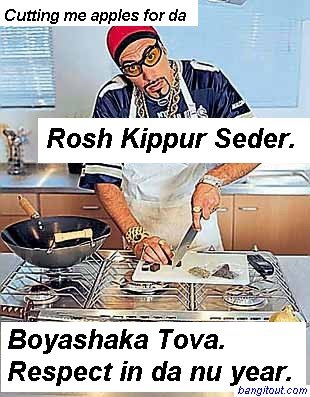 So what does this all mean in being a member of the Chosen People. As Private Detective Adrian Monk would say “it’s a gift… and a curse”. We as Jews have a special relationship with God, as is, I’m sure many other religions do. However, we are Yisrael, named after a man whose new name is sort of an acronym meaning “he who fights with gods and men and is victorious”. We are not a submissive religion. Islam literally means submission to God. When Abraham says his aforementioned phrase, he is in the midst of an argument with God over the inhabitants of Sodom and Gomorrah. Abraham, like all people, has been endowed with a free will. Rabbi Akiba says in the third chapter of Pirkei Avot, the Lessons of our Sages: "הכל צפוי, והרשות נתונה", “though all is foretold, free will is given”. This allows for humanity to be as wonderful or indeed, as evil, as it wants to be without it being controlled by a higher power. However, there still is the matter of answering for our actions. Jews, as close as they are to God are constantly known as a stiffnecked people which has stubbornly gotten us into trouble for staying the course but has also kept us alive as a people.
 Which is worse, a robber or a burglar? It may seem a redundant question, both steal, and the only difference is time. A robber steals during daylight, a burglar at night. From this we can infer that the robber is fearless of their fellow mortals, stealing right in front of people. The fact that the burglar steals at and into the night suggests that they are afraid of people and will therefore employ the stealth of night to get past then. But the burglar is worse because they fear man but not God. One of the most important characteristics of a “good Jew” is יראת שמים, awe of heaven, fear of God.
It is important to have that Almighty chip on your shoulder. A kippa sits on my head not out of any Biblical or Talmudic halacha that I know, but as a symbol, a hat which not only reminds me that I’m a Jew and a representative of the Chosen People, but it also tells everyone else that. I’m not about to walk into a pornography store or a McDonalds if I have my trusty yarmulke on my head. It would beמראת עין (maras ayin), as we would say in Yiddish, a shande for the goyim. The purpose of the tzitzit strings on the tallit are to act as reminders to do mitzvot. Indeed there is more expected from us than of other peoples. Talk of “disproportionate response” is disproportionately thrust upon Israel even though she shows disproportionate restraint. Judaism is prized for its morality and equity. Jews can’t be robbers (“what would the goyim think?!”) or burglars (and let God see us misbehaving?!”). Instead we must do right in the eyes of both God and man.
During these Ten Days of Repentance the word El (“God”) becomes Melech (“King”) in many of our prayers. We refer constantly to God as King. I’m Baal Shacharit, the leader of the morning service at my synagogue on the High Holidays and the first word in the service I chant is "המלך!" “The King!” Many assume that God becomes even more lofty during this time of the year sitting in judgment. I dissent and say that, au contraire, we ascend to greater heights. Like Rabbi Ishmael in the Yom Kippur Martyrology known as אלה אזכרה, we are able to ascend heavenward. The relationship with a god is ethereal and disconnected. A god answers to nobody and there are no consequences for the god’s whims. A king, by title, is a royal representative and even an absolute king is somewhat accountable to his people. We have the ability to show the King our “A-Game” this week and write ourselves in for a year of goodness, of health, of success, of sweetness, of redemption, of love, of peace. May we be inscribed in such a book.
לשנה טובה תכתיבו ותחתימו
 PS: Anyone feeling lucky should consider joining my facebook group
 People who already know they've been written in the Book of Life 5767
Wednesday, September 20, 2006
Dodger Tallis Tales
I don't usually report on specific Dodger games and the glorious bums are poised to screw it up again as I write this, but the Dodgers had one of the most memorable and miraculous games in baseball history last night. Coming off a deficit of 5 to 9 against our main rivals, the San Diego Padres, the dodgers hit four straight home runs on their first four at bats of the final sanctioned inning of the game, tying the score. This is only the fourth time in Major League history that there have been four straight dingers They then had a walk-off home run making the final score 11-10.
Anyway the story here is that I had made for myself a Dodgers tallis last Thursday (out of a Dodger fleece blanket and the strings from an old ripped tallit katan) when I took my regular tallis for it's annual dry-cleaning. My joke had, until this morning, been that since I have worn this tallis, the Dodgers had gotten to first place in the wildcard. Unfortunately, this is the result of them dropping out of first place in the division. Before minyan this morning someone told me that my tallis was finally working. Having given up on the Dodger game when hope looked like it was lost, like most fans, I didn't know that they had won. Anyway, I TiVoed the replay of the game today and watched the 9th and 10th innings. Whoa!
This counterbalances the horrendous defeat we took last week from the last place in the league Chicago Cubs who somehow defeated us when we were up 7-nil (which they were somehow able to overcome). But San Diego won against the D'Backs tonight and it looks like we're gonna drop this one to the Pittsburg Pirates. Looks like they're going to be 0.5 back again and I'm going to have to turn my Tallit inside out. That's right: Rally Tallis!
Anyway the story here is that I had made for myself a Dodgers tallis last Thursday (out of a Dodger fleece blanket and the strings from an old ripped tallit katan) when I took my regular tallis for it's annual dry-cleaning. My joke had, until this morning, been that since I have worn this tallis, the Dodgers had gotten to first place in the wildcard. Unfortunately, this is the result of them dropping out of first place in the division. Before minyan this morning someone told me that my tallis was finally working. Having given up on the Dodger game when hope looked like it was lost, like most fans, I didn't know that they had won. Anyway, I TiVoed the replay of the game today and watched the 9th and 10th innings. Whoa!
This counterbalances the horrendous defeat we took last week from the last place in the league Chicago Cubs who somehow defeated us when we were up 7-nil (which they were somehow able to overcome). But San Diego won against the D'Backs tonight and it looks like we're gonna drop this one to the Pittsburg Pirates. Looks like they're going to be 0.5 back again and I'm going to have to turn my Tallit inside out. That's right: Rally Tallis!
Friday, September 15, 2006
DVAR TORAH: Nitzavim/Vayelech (It's not in heaven; choose life!)
As I helped my brother with his Talmud homework last week, the story from Baba Metzia 59a I realized that this all important sugya (short section unit in the Talmud) is coming up in the Portion of the Week. In a nutshell, the account of the argument over Achnai's oven It's Rabbi Eliezer versus the rest of the Sanhedrin on an issue of purity. Lonely Eliezer seem's to have God's backing as he causes many miracles to happen to back him up, a river defies gravity, walls bend, and a bat kol, a heavenly voice calls out and says "Rabbi Eliezer is right" to which the leader of the supposedly 70 people in the majority opinion says "we do not listen to heavenly voices, לא בשמים הוא Lo BaShamayim Hi, it is not in heaven". We find the context of this quote in Parashat Nitzavim.
The archaic nature of the 1917 JPS Bible aside, this little piece of Torah basically gives carte blanche to future rabbis to interpret the Torah as they will without threat of divine intervention in their interpretation. The Torah was given to us. Its secrets are ours to uncover, as we find in the first weird thing I ever found in a torah scroll: a great many revii dots over letters in the torah scroll (which I once actually mistook as revii trop and read each and every letter as a seperate revii). The final verse of chapter 29, this time my own translation: that which is hidden belongs to the Lord, but that which is revealed is for us and our children forever to perform all which the torah speaks (Hebrew term: Divrei Torah). This, I posit, is the source of my writing these each week. We are to reveal Torah through Dvar Torah, through speaking words of Torah from our own viewpoint, adding on to the 3500+ year old text with our own commentary and expertise. It is not in heaven, it's here for us to unravel. The name Israel in hebrew means "triumphing over God", and when Rabbi Joshua makes this statement to Rabbi Eliezer, God tells Elijah the Prophet, with a smile, "My children have triumphed over me".
I want to expand upon my conclusion to last week's Dvar Torah. Nitzavim ends with the four choices of life, death, good, and evil, and God implores us to choose life. I find this absolutely fascinating and so emblematic of what Judaism stands for. Life over good. Though we specificially wish for good life, we mainly ask for life itself at this time of year. Life brings both good and evil and has its ups and downs. If we only got good and there was no evil in the world, we would be at the same state as we were in the Garden of Eden. As I will, God willing, discuss in a couple of weeks, after the Holidays in regards to Parashat Bereishit, I don't think the Garden of Eden was such a good thing. They ate from the tree of knowledge of Good and Evil and not from the tree of Life. We refer to the Torah as the Tree of Life. It has good moments and it has bad moments, triumphs for the Jewish people, and occasions, possibly more numerous than the triumphs, when we had done shameful acts. The Torah, regardless of where you think it came from, and I tend to have a conservative (little 'c') view on this, is meant for human consumption. There is no life wholly good. Life has its ups and has its downs and it requires this dichotomy. If everything was good, life would be boring. To paraphrase Dark Helmet from Spaceballs, "good is dumb". Too much of a good thing could be a bad thing, as we see with the story of Choni the Circle maker, too much blesséd rain can flood and kill you.
Oh yeah, Vayelech is where Moses transfers his powers to Joshua on his 120th birthday and clears his throat to begin his final song. Kind of a scrawny cow compared to Nitzavim, but important nonetheless.
I wish for you to be written not only in the book of life, but sealed in the book of good life. In the spirit of the season, if I have wronged you in any way with my words (or anything else), I apologize.
Shabbat Shalom, Shana Tova,
Matt
PS: As of press, my webcounter is currently at 3080. Neat.
11 For this commandment which I command thee this day, it is not too hard for thee, neither is it far off. 12 It is not in heaven, that thou shouldest say: 'Who shall go up for us to heaven, and bring it unto us, and make us to hear it, that we may do it?' 13 Neither is it beyond the sea, that thou shouldest say: 'Who shall go over the sea for us, and bring it unto us, and make us to hear it, that we may do it?' 14 But the word is very nigh unto thee, in thy mouth, and in thy heart, that thou mayest do it. {S} 15 See, I have set before thee this day life and good, and death and evil, 16 in that I command thee this day to love the LORD thy God, to walk in His ways, and to keep His commandments and His statutes and His ordinances; then thou shalt live and multiply, and the LORD thy God shall bless thee in the land whither thou goest in to possess it. 17 But if thy heart turn away, and thou wilt not hear, but shalt be drawn away, and worship other gods, and serve them; 18 I declare unto you this day, that ye shall surely perish; ye shall not prolong your days upon the land, whither thou passest over the Jordan to go in to possess it. 19 I call heaven and earth to witness against you this day, that I have set before thee life and death, the blessing and the curse; therefore choose life, that thou mayest live, thou and thy seed; 20 to love the LORD thy God, to hearken to His voice, and to cleave unto Him; for that is thy life, and the length of thy days; that thou mayest dwell in the land which the LORD swore unto thy fathers, to Abraham, to Isaac, and to Jacob, to give them. {P}
The archaic nature of the 1917 JPS Bible aside, this little piece of Torah basically gives carte blanche to future rabbis to interpret the Torah as they will without threat of divine intervention in their interpretation. The Torah was given to us. Its secrets are ours to uncover, as we find in the first weird thing I ever found in a torah scroll: a great many revii dots over letters in the torah scroll (which I once actually mistook as revii trop and read each and every letter as a seperate revii). The final verse of chapter 29, this time my own translation: that which is hidden belongs to the Lord, but that which is revealed is for us and our children forever to perform all which the torah speaks (Hebrew term: Divrei Torah). This, I posit, is the source of my writing these each week. We are to reveal Torah through Dvar Torah, through speaking words of Torah from our own viewpoint, adding on to the 3500+ year old text with our own commentary and expertise. It is not in heaven, it's here for us to unravel. The name Israel in hebrew means "triumphing over God", and when Rabbi Joshua makes this statement to Rabbi Eliezer, God tells Elijah the Prophet, with a smile, "My children have triumphed over me".
I want to expand upon my conclusion to last week's Dvar Torah. Nitzavim ends with the four choices of life, death, good, and evil, and God implores us to choose life. I find this absolutely fascinating and so emblematic of what Judaism stands for. Life over good. Though we specificially wish for good life, we mainly ask for life itself at this time of year. Life brings both good and evil and has its ups and downs. If we only got good and there was no evil in the world, we would be at the same state as we were in the Garden of Eden. As I will, God willing, discuss in a couple of weeks, after the Holidays in regards to Parashat Bereishit, I don't think the Garden of Eden was such a good thing. They ate from the tree of knowledge of Good and Evil and not from the tree of Life. We refer to the Torah as the Tree of Life. It has good moments and it has bad moments, triumphs for the Jewish people, and occasions, possibly more numerous than the triumphs, when we had done shameful acts. The Torah, regardless of where you think it came from, and I tend to have a conservative (little 'c') view on this, is meant for human consumption. There is no life wholly good. Life has its ups and has its downs and it requires this dichotomy. If everything was good, life would be boring. To paraphrase Dark Helmet from Spaceballs, "good is dumb". Too much of a good thing could be a bad thing, as we see with the story of Choni the Circle maker, too much blesséd rain can flood and kill you.
Oh yeah, Vayelech is where Moses transfers his powers to Joshua on his 120th birthday and clears his throat to begin his final song. Kind of a scrawny cow compared to Nitzavim, but important nonetheless.
I wish for you to be written not only in the book of life, but sealed in the book of good life. In the spirit of the season, if I have wronged you in any way with my words (or anything else), I apologize.
Shabbat Shalom, Shana Tova,
Matt
PS: As of press, my webcounter is currently at 3080. Neat.
Tuesday, September 12, 2006
9/11 remembered
Five years ago today I was in Hebrew class when it happened. A couple of miles north of Ground Zero on New York City's isle of Manhattan I sat in the second row on the left side of a room on the fourth floor of the Unterberg building at the Jewish Theological Seminary struggling to keep awake during 8:20 AM Hebrew on a morning I negelected to bring coffee. It was my first week of college; I'd learn by exeperience to be caffinated for morning classes and late nights in Butler Library. I was roused by a loud noise, a sonic boom above and later the wailing many many strange-sounding sirens attached to emergency vehicles racing south on all the north-south avenues that they could manage. I thought nothing of either, I was too tired. Refreshed after our mid-class break (Hebrew classes were two hours long so the teacher would give us a 10-15 minute break in the middle) we returned to class, well, some of us anyway. A few tarried and brought back the report that a helicopter had hit one of the towers of the World Trade Center, apparently an accident. I was brand new to New York City and in my naïveté I thought maybe helicopters on occasion accidentially run into the tallest buildings in Manhattan. By this point I was awake, and now I was wide awake. I suddenly realized through chatting with my friends and classmates (because though the professor tried to continue teaching, she was unable to control the class this morning, this needed to be discussed) that maybe this doesn't happen so often; that area of Manhattan is a no-fly-zone. Yet another student came back even later and said that there was a burst from the second tower. I immediately cried foul and asked the teacher to be excused. I carried a portable radio with me every morning (to listen to Howard Stern) and tried to get the news, but ALL stations were completely out. I realized that because communications towers need to be as high as possible, in a place like New York City with so many tall buildings, they would need to be on the tallest. WTC. This was no accident, this was terrorism and I felt that JTS as the most prominent Jewish institution in the western hemisphere was a very good target so I hightailed it out of there. For the first time since I arrived in New York, I wanted to call home, to let them know I was okay, and as I didn't at that point own a cell phone, I headed to my dorm at Mathilde Schechter Residence Hall two blocks and one-and-a-half cross-towns away. I called from the basement/bomb shelter. I feared that I would have to use it as the latter. It was the first time I talked to my immediate family since I arrived in New York but it was not the last time they heard from me at 6:30 in the morning Pacific Time. Pretty soon everyone followed my lead as the Residence Director ordered everyone that was in the building at the time, the population of which was strangely large for that time on a Tuesday morning but was probably fueled by people having similar ideas that I did, as well as those who either didn't have, or, more likely, slept through 8:20 Hebrew. Everyone was evacuated from superterranean floors and sent to the basement where people joined me for NBC's coverage of the unfolding events in the TV lounge (Thank God we had a TV in there and it's not like the spooky crypt that is Goldsmith Hall's basement). I couldn't believe my eyes when the first tower fell. Only one Twin Tower? It looked so odd, so lonely. And then there were none.  Just two nights before I was on the Staten Island Ferry, returning from a Celebrity Softball Game at the AA Yankee Stadium in Richmond and noting the beauty of the two towers bathing majestically in the moonlight and the two long reflections in the water. I was one of the last people on earth who would ever witness that beautiful sight. 30 hours later, it was gone.
This day I lost my freshman innocence and had to grow up very quickly to the realities of the world. I also was privy to a side of New York that is rarely seen. Manhattanites of all breeds took off their masks and their reservations. Amidst the papers and ash that were falling from the sky (and yes, the wind did bring them to us) people were congregating in the streets and hugging each other and asking of the welfare of perfect strangers. I could feel the warmth in people who are normally so cold. That very night we held a midnight candlelit vigil at Columbia and the megaphone was open for people to express their feelings. The person who spoke immediately before me was covered head-to-toe in soot. He had escaped the towering inferno and was caught in the advancing pillars of black smoke when the buildings came down. Because all streets were closed, he had walked all the way to Morningside Heights after helping others down there. I didn't know how to follow his comments but I still allowed myself to pour out my feelings.
The world has become a different place because of what happened five years ago today and even now we still feel the pain. Hatred caused those buildings to come down. May we rebuild and see peace.
 Just two nights before I was on the Staten Island Ferry, returning from a Celebrity Softball Game at the AA Yankee Stadium in Richmond and noting the beauty of the two towers bathing majestically in the moonlight and the two long reflections in the water. I was one of the last people on earth who would ever witness that beautiful sight. 30 hours later, it was gone.
 This day I lost my freshman innocence and had to grow up very quickly to the realities of the world. I also was privy to a side of New York that is rarely seen. Manhattanites of all breeds took off their masks and their reservations. Amidst the papers and ash that were falling from the sky (and yes, the wind did bring them to us) people were congregating in the streets and hugging each other and asking of the welfare of perfect strangers. I could feel the warmth in people who are normally so cold. That very night we held a midnight candlelit vigil at Columbia and the megaphone was open for people to express their feelings. The person who spoke immediately before me was covered head-to-toe in soot. He had escaped the towering inferno and was caught in the advancing pillars of black smoke when the buildings came down. Because all streets were closed, he had walked all the way to Morningside Heights after helping others down there. I didn't know how to follow his comments but I still allowed myself to pour out my feelings.
The world has become a different place because of what happened five years ago today and even now we still feel the pain. Hatred caused those buildings to come down. May we rebuild and see peace.
Subscribe to:
Posts (Atom)